

Uzbekistan is landlocked and has no seaport of its own, so every container that reaches it by sea has to cross at least one other country first. For traders moving goods between the Persian Gulf, South Asia, or Turkey and the Uzbek market, transit to Uzbekistan via Iran is one of the shortest and most established overland options available.
This guide explains the route, the border crossings, the transport modes, the documents you need, and what to check before you book, including the current regional situation, updated as of August 2026.
Why Use Iran for Transit to Uzbekistan?
Iran sits between the Persian Gulf and Central Asia, which makes it a natural bridge for cargo heading north. Choosing transit to Uzbekistan via Iran offers three practical advantages over routing through the Caucasus or via Russia:
- Shorter distance: Cargo landed at Bandar Abbas (Shahid Rajaee port) or moved overland from Turkey through Iran reaches Central Asia faster than routes that go around the Caspian Sea.
- Established rail and road infrastructure: Iran's northern border with Turkmenistan has two working rail links into the region, both connected to the Uzbek network.
- A dedicated legal framework: The 2016 Ashgabat Agreement, signed by Iran, Turkmenistan, Uzbekistan, Kazakhstan, Oman, and India, was created specifically to simplify multimodal transit between the Persian Gulf and Central Asia.
For businesses in India, China, Turkey, and the UAE, this corridor forms part of the wider International North-South Transport Corridor (INSTC), which links Mumbai to Moscow and St. Petersburg through Iranian territory.
Learn more: Transit to CIS Countries via Iran
Understanding the Route: How Cargo Moves From Iran to Uzbekistan
Uzbekistan does not share a direct border with Iran. Transit to Uzbekistan via Iran always passes through Turkmenistan, which sits between the two countries. In practice, this means cargo entering Iran, whether by sea at a southern port or overland from Turkey or Iraq, travels north through Iran, crosses into Turkmenistan at one of two border points, then continues to the Uzbek border and on to Tashkent, Bukhara, or Samarkand.
The Two Border Crossings That Matter
Almost all commercial transit to Uzbekistan via Iran uses one of these two Iran-Turkmenistan crossings:
| Crossing | Iranian Province | Mode | Connects To |
|---|---|---|---|
| Sarakhs | Khorasan Razavi | Rail and road | Mary, Turkmenistan → onward to Uzbekistan via the Turkmen rail network |
| Incheh Boroun | Golestan | Rail (Iran–Turkmenistan–Kazakhstan line) | Turkmenistan's eastern Caspian route → connects toward Uzbekistan and Kazakhstan |
- Sarakhs is the busier crossing and the one most freight forwarders use by default. It has a working rail link opened in 1996 and is undergoing capacity upgrades, including new dual-gauge track, agreed by Iran and Turkmenistan to raise cross-border freight volumes toward 20 million tons a year.
- Incheh Boroun, in Golestan province, is the newer link and is often preferred for cargo already routed through eastern Iran.
The Gauge Break: What You Need to Know
Iran's railways use standard gauge (1,435 mm), while Turkmenistan and Uzbekistan use the wider Russian gauge (1,520 mm). This means containers cannot simply roll across the border on the same wagon. At Sarakhs and Incheh Boroun, cargo is either transferred to different wagons or the wagon's wheel assembly (the "bogie") is exchanged for one matching the new gauge.
This step adds time to rail transit, so it should always be factored into your schedule and budget. If you are planning for transit to Uzbekistan via Iran, contact our logistics team today to get a tailored freight solution for your shipment.
Transport Modes for Transit to Uzbekistan via Iran
Rail Freight
Rail freight is the backbone of the eastern INSTC branch and the most cost-efficient way to move bulk and containerized cargo in transit to Uzbekistan via Iran. In December 2025, an Iranian-made freight train completed the first direct rail transit through Turkmenistan to Bukhara, carrying metallurgical products, a sign that direct rail transit between the two countries, previously restricted, is opening up further.
Road Freight (Trucking)
Trucking offers more flexibility for smaller or time-sensitive shipments and for routes where rail schedules do not align with the customer's needs. It requires a TIR Carnet for uninterrupted cross-border movement and is more exposed to border-crossing delays and security conditions along the way.
| Factor | Rail | Road (Trucking) |
|---|---|---|
| Best for | Bulk cargo, full containers, large volumes | Smaller loads, urgent or flexible shipments |
| Typical transit, Bandar Abbas to Tashkent area | 10–16 days, depending on gauge-change dwell time | 12–18 days, depending on border conditions |
| Key document | SMGS rail waybill | TIR Carnet |
| Main bottleneck | Bogie exchange/transshipment at the border | Customs clearance and border queue times |
| Cost profile | Lower per ton on large volumes | Higher per ton, but more direct door-to-door control |
Transit times are route and season-dependent estimates for planning purposes. Confirm current transit times with our logistics coordinators before planning your shipment.
 Step-by-Step: How Transit to Uzbekistan via Iran Works
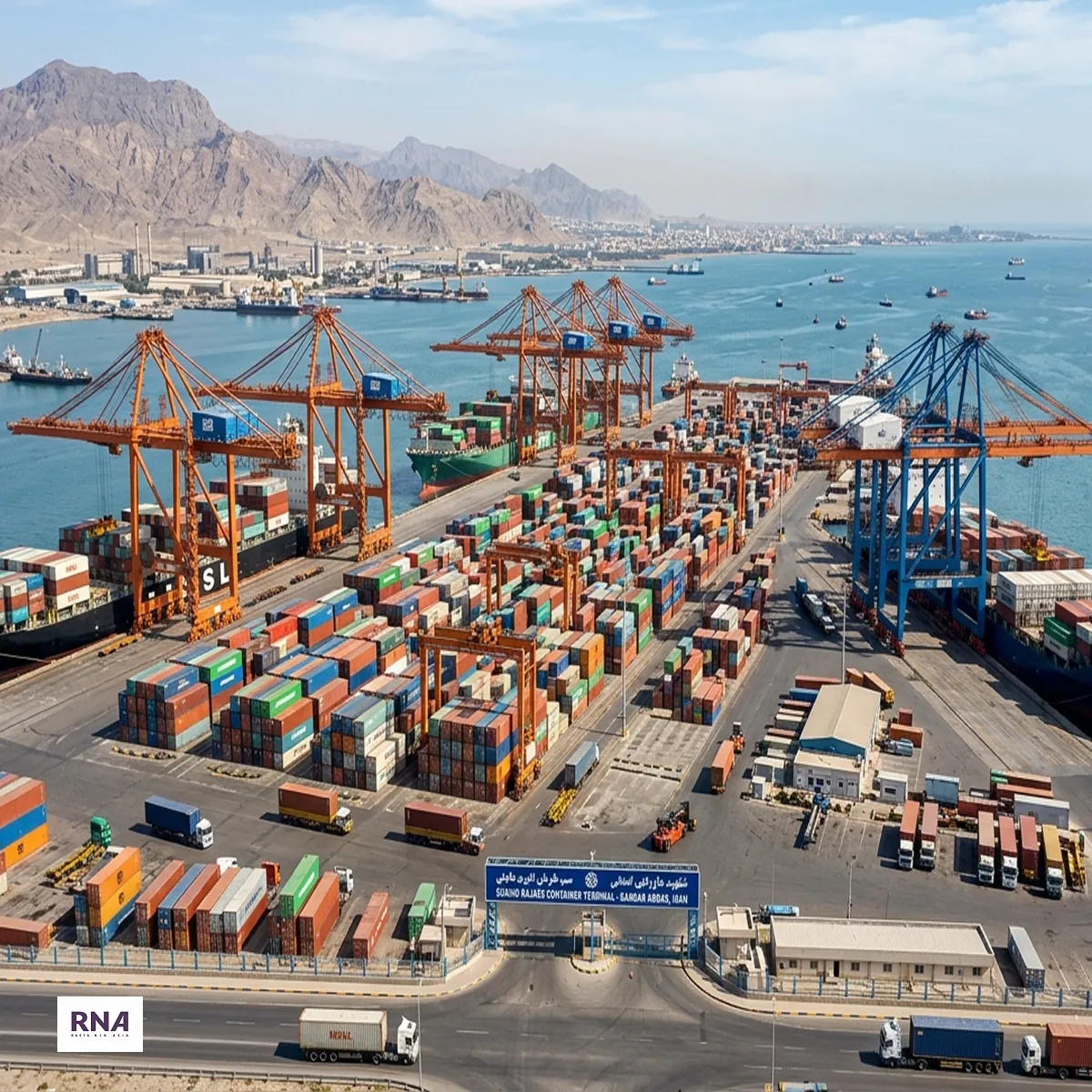
- Cargo arrives in Iran either by sea at Bandar Abbas (Shahid Rajaee port) or overland at a western border, such as Bazargan, for cargo originating in Turkey or Europe.
- Customs clearance and transit registration in Iran, using the Sabtaresh registration system and the EPL (Electronic Permit) process through IRICA (Iran's customs authority).
- Domestic transport to the northern border, by rail or truck, to Sarakhs or Incheh Boroun.
- Border crossing into Turkmenistan, including gauge-change handling for rail cargo.
- Transit through Turkmenistan to the Uzbek border, typically via Farab or Kerki.
- Final delivery inside Uzbekistan, to Bukhara, Samarkand, Tashkent, or another agreed destination.
Required Documents for Transit to Uzbekistan via Iran
Documentation is where most delays happen. A complete, accurate document set is the single biggest factor in a smooth transit to Uzbekistan via Iran.
- Commercial invoice and packing list
- Bill of Lading (or Through Bill of Lading for combined sea-rail-road movements)
- TIR Carnet, for road transit
- SMGS rail waybill, for rail transit (Turkmenistan and Uzbekistan are both SMGS members)
- Certificate of Origin
- Iranian transit customs declaration (processed through IRICA's EPL system)
- Sabtaresh registration confirmation
- Insurance certificate
- Any product-specific permits (for example, for agricultural goods or chemicals)
Current Situation: What to Check Before You Book (August 2026)
Regional Update — verified August 2026
Since April 2026, the United States has maintained a naval blockade affecting vessels entering and leaving Iranian ports, including Bandar Abbas. The blockade was reinstated in July 2026 after an earlier memorandum of understanding lapsed, and as of late August 2026 it remains active, with heavy disruption to sea-borne cargo through the Strait of Hormuz.
This mainly affects the SEA LEG of the corridor, cargo that needs to arrive at or leave from Bandar Abbas by ship. It does not automatically block the overland Iran–Turkmenistan–Uzbekistan rail and road corridor, which can still move cargo that is already inside Iran or that enters Iran overland from Turkey or Iraq.
Given how fast conditions are changing, treat any transit time or routing quoted online, including in this article, as an estimate. Confirm current port status, border operating hours, and routing with an RNA coordinator before finalizing a shipment.
This is a fast-moving situation, and RNA maintains representatives at Iran's key borders and ports, so we can confirm real-time conditions rather than relying on outdated reports. If sea access to Bandar Abbas is restricted when your cargo is ready to move, we can advise on alternative entry points into the Iranian network, or hold cargo until conditions clear.
Common Challenges in Iran-Uzbekistan Transit and How RNA Solves Them
Gauge-change delays
We plan bogie-exchange or transshipment windows into the schedule from the start, instead of treating them as a surprise at the border.
Incomplete documentation
Our team checks TIR Carnet, SMGS waybill, and IRICA/EPL paperwork before cargo reaches the border, which is where most preventable delays happen.
Limited visibility once cargo leaves the port
RNA provides shipment tracking and regular status updates from pickup at the Iranian border or port through to final delivery in Uzbekistan, so you are never left guessing.
Changing regional conditions
Because we have representatives at Iran's borders and strong relationships with transport operators on the ground, we can reroute or adjust plans quickly if conditions change.
Why Choose Rasta Nik Asia for Transit to Uzbekistan via Iran
Rasta Nik Asia is not a simple trucking company; we are a freight forwarder and transit logistics coordinator built specifically for cargo moving through Iran to destinations like Uzbekistan. We offer:
- Representatives at all major Iranian borders, including Sarakhs and Incheh Boroun
- Established relationships with transport companies and drivers across the corridor
- Transparent, regular shipment reporting
- English-language communication built for international traders, not just domestic clients
- Multimodal solutions combining sea, rail, and road for the most efficient route available
Moving cargo to Uzbekistan through Iran? Talk to Rasta Nik Asia today to compare your route options and get a tailored freight solution with reliable coordination from origin to destination.
Conclusion
Transit to Uzbekistan via Iran remains one of the most practical overland options connecting the Persian Gulf and Central Asia, supported by rail infrastructure, a dedicated multimodal agreement, and growing cross-border capacity at Sarakhs and Incheh Boroun.
The route requires careful planning around the Turkmenistan gauge break, full documentation, and, in the current environment, up-to-date verification of port and border conditions.
Working with a forwarder that has people on the ground at every stage of the journey is the difference between a shipment that arrives on schedule and one that gets stuck at the border. Contact Rasta Nik Asia to plan your next transit shipment to Uzbekistan.