
In today’s fast-moving global trade, efficiency and reliability are critical. For traders from CIS countries, India, China, Turkey, the UAE, and beyond, Iran plays an important role as a gateway between East and West. One of the best methods to move goods in this region is through multimodal freight transport in Iran.
This system combines sea, air, and land transport to create a smooth supply chain. Iran has a very important location between the Persian Gulf, Central Asia, and Europe. Multimodal transportation in Iran gives international traders flexibility, speed, and reduced freight costs.
In this article, we explore how multimodal freight works, why Iran is an ideal hub, and how companies like Rasta Nik Asia support global businesses in moving their goods with confidence.
What is multimodal freight transport in Iran?
Multimodal freight transport in Iran means moving goods using at least two different transport modes, such as sea and rail or air and road, under a single contract with one responsible operator. This differs from intermodal transport, where each leg of the journey is handled under a separate contract with a different carrier.
Benefits of multimodal freight transport in Iran include:
- Time savings: Smooth transitions between transport modes reduce delays.
- Cost efficiency: Combining sea and rail often lowers costs compared to air freight alone.
- Flexibility: Traders can adjust routes depending on cargo type and urgency.
- Simplified paperwork: One contract and one operator reduce administrative work.
Why Iran is a Strategic Hub for Multimodal Transportation
Iran’s geography makes it one of the most important trade corridors in Eurasia.
Key advantages of Iran's position include:
- Persian Gulf access: Major southern ports like Bandar Abbas (home to the Shahid Rajaee Container Terminal, Iran's largest container hub) connect traders to Asia and Africa.
- Chabahar Port access: Located outside the Persian Gulf on the Gulf of Oman, Chabahar gives traders, especially those from India, a direct sea route into Iran and onward to Afghanistan and Central Asia without transiting through other countries.
- Proximity to CIS markets: Goods can move quickly to Kazakhstan, Uzbekistan, and Turkmenistan via Iran's rail network, including the Sarakhs and Incheh Boroun rail border crossings with Turkmenistan.
- Land routes to Europe: Road and rail corridors link Iran to Turkey and beyond, including rail connections that cross into Turkey via the Razi/Kapikoy border.
- Air connections: Major airports in Tehran, Mashhad, and Shiraz serve as regional hubs for time-sensitive cargo
Because of these advantages, multimodal freight transport through Iran is becoming more popular, especially for food, livestock, and industrial goods.
Learn more: shipping products through Iran
Modes of Transport Combined in Iran
1. Sea and Land freight in Iran
Many shipments reach southern ports by sea. They are then transported by road or rail across Iran to CIS countries. This method works well for bulk goods such as grains, animal feed, and construction materials.
Example: A shipment from India to Kazakhstan can enter through Bandar Abbas and reach Almaty via Iran's rail network in just a few days.
2. Air and Road Freight in Iran
When traders need faster delivery and want to save costs, goods arrive at Tehran International Airport and then travel by truck to nearby destinations.
Example: Electronics from China can be flown into Iran, then delivered quickly to Turkey or Azerbaijan by road.
3. Sea and Air Freight in Iran
In special cases, goods arrive by ship to Iran, then transfer to air transport for faster regional distribution. This mix balances cost and speed for high-value cargo.
4. The Caspian Sea Route: A Northern Option Traders Often Overlook
Most guides on multimodal transport in Iran focus only on the Persian Gulf. But Iran also has a working northern corridor through its Caspian Sea ports, and it deserves more attention than it usually gets.
Iran's main Caspian ports are Anzali, Amirabad, and Nowshahr, all located in the north of the country. Anzali is particularly useful for multimodal planning because it sits on the Rasht–Caspian rail link, which opened in 2024 and connects the port directly to Iran's national rail network. Amirabad also has direct rail access, which makes it one of the few Caspian ports where cargo can move from ship to train without extra road transfers.
This northern route matters for two reasons.
- First, it gives traders a second option for reaching Russia and the wider Caspian region without relying only on the Central Asian land borders.
- Second, it is part of the Trans-Caspian branch of the INSTC (more on that below), so goods can, in principle, travel from southern ports like Bandar Abbas or Chabahar all the way to Anzali, cross the Caspian by ship, and continue into Russia by rail.
In practice, most traders use the Caspian route for bulk agricultural cargo, such as grain, oilseeds, and fertilizer, moving between Iran, Russia, and Kazakhstan.
Example: Grain arriving in Iran from a Caspian-region supplier can be unloaded at Anzali or Amirabad and moved onward by rail toward central Iran, avoiding a longer road journey.
How Multimodal Freight Transport in Iran Works Step by Step
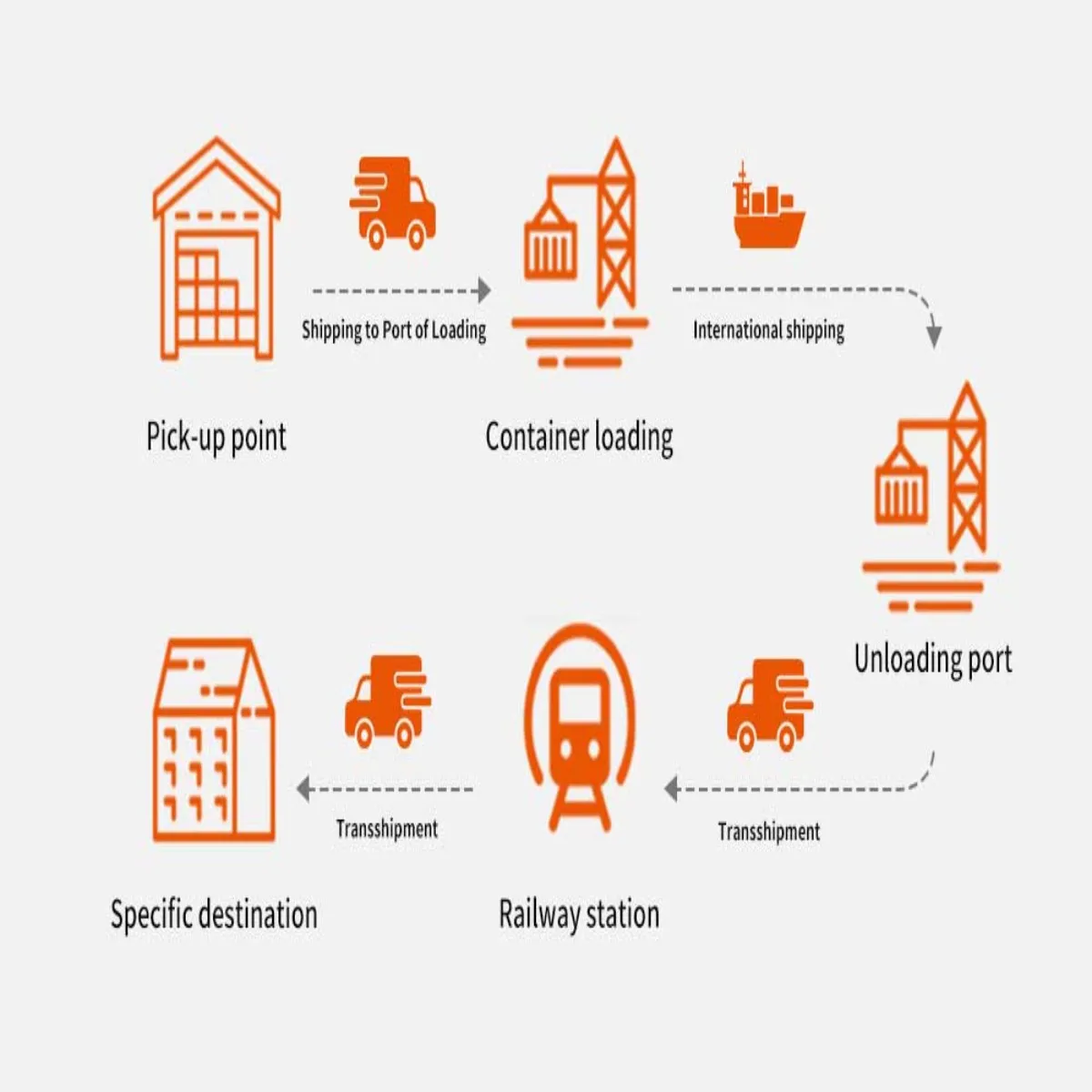
Successful multimodal freight transport in Iran relies on smooth coordination at every stage of the supply chain. When sea, rail, and road work together under one contract, traders benefit from efficiency and reliability.
The multimodal transportation process can be summarized in four key steps:
- Collection and preparation: Cargo is picked up from the supplier and prepared for international shipment.
- Port operations: Containers are loaded at the port of origin and moved by sea to Iran.
- Transshipment and inland transport: Goods are unloaded and transferred by road or rail across Iran toward regional markets.
- Final delivery: Cargo reaches its specific destination with clear reporting and simplified documentation.
This combined method for multimodal transportation in Iran reduces costs, speeds up delivery, and lowers administrative hurdles for international traders.
Benefits of multimodal freight transport in Iran for International Traders
For merchants and traders working in food, livestock, and industrial goods, multimodal freight transport in Iran has several advantages:
- Reduced transit time: Shorter lead times help businesses meet market demand quickly.
- Lower logistics costs: Blending sea and rail or road is cheaper than air freight alone.
- Access to landlocked markets: CIS countries without direct sea access benefit from Iran’s transport corridors.
- Reliable partners: Companies like Rasta Nik Asia provide clear communication, fast response, and real-time reporting.
Challenges of multimodal freight transport in Iran
Although the benefits are significant, traders should also consider some common challenges of multimodal freight transport in Iran. These include:
- Customs and border regulations: Documentation errors or incomplete paperwork may lead to delays.
- Seasonal congestion: Peak trade periods or harvest seasons can cause longer waiting times at borders.
- Fuel price changes: Shifts in local fuel costs can affect overall transport expenses.
- Weather disruptions: Heavy snow in the north or high summer heat in the south can slow down road and rail transport.
- Infrastructure limits: In some regions, older road or rail networks may impact delivery speed.
The Rail Gauge Challenge
One technical issue rarely gets explained clearly, even though it directly affects transit time for any trader using rail as part of a multimodal route: Iran's railway uses standard gauge (1,435 mm), while most former Soviet countries, including Turkmenistan, Kazakhstan, and Russia, use the wider 1,520 mm gauge. This means a train cannot simply cross the border and continue; something has to change first.
Iran solves this with bogie exchange stations at its northern and eastern rail borders. At Sarakhs, on the Turkmenistan border, wagons are lifted, and their undercarriages (bogies) are swapped for the correct gauge, allowing hundreds of wagons to cross each day without unloading the cargo itself.
A similar setup exists at Incheh Boroun, also on the Turkmenistan border, and at Jolfa on the Azerbaijan border. On the eastern side, the border with Pakistan at Zahedan/Mirjaveh involves a third gauge entirely (1,676 mm, the same broad gauge used in Pakistan and India), so cargo moving in that direction goes through a separate transshipment process.
Why does this matter for your shipment? Because bogie exchange and transshipment both take time, and the speed of that process depends on how well your documentation and cargo details match what customs and rail staff expect at the border.
Correct paperwork means the wagon moves through the exchange facility without extra checks. This is one more reason why route planning and documentation accuracy determine how fast multimodal cargo actually moves through Iran.
How to Overcome Multimodal Transportation Challenges
Working with an experienced logistics partner is the best way to minimize multimodal transportation risks. Rasta Nik Asia supports traders by:
- Offering alternative routing solutions when borders are congested.
- Providing accurate freight documentation and customs guidance to avoid errors.
- Delivering real-time updates and proactive communication during the journey.
- Leveraging strong local networks at ports, borders, and terminals for faster clearance.
Rasta Nik Asia’s Role in Multimodal Freight Transport
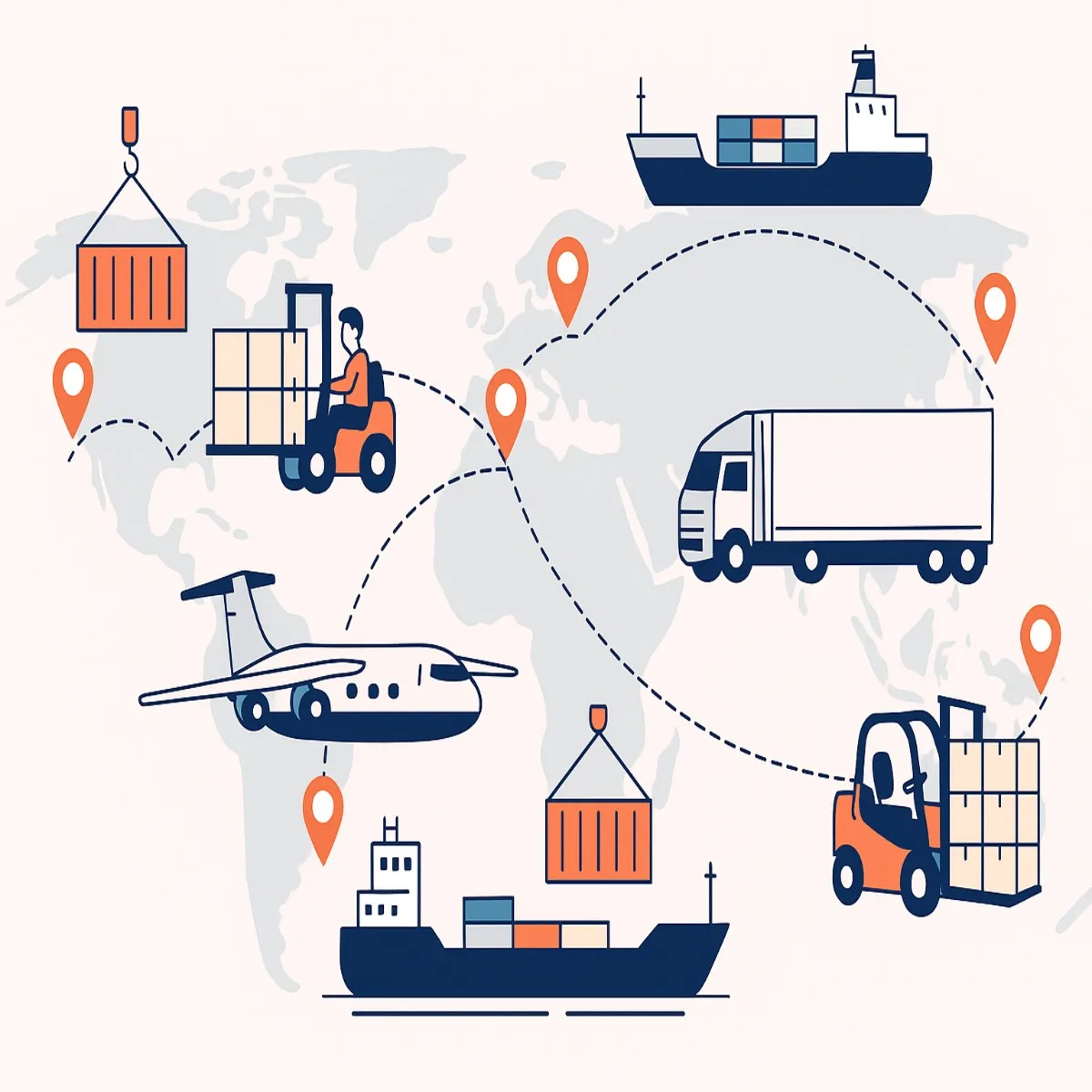
At Rasta Nik Asia, we specialize in connecting traders with safe, efficient, and transparent logistics solutions. Our services in multimodal transportation in Iran include:
- End-to-end planning for sea, air, and land routes.
- Close cooperation with Iranian border offices and regional partners.
- Transparent tracking and reporting throughout the journey.
- 24/7 availability and quick response to client needs.
Because our team maintains representatives at Iran's key ports and border crossings, we can spot routing or documentation issues early, before they turn into delays on the road. With strong networks across the Persian Gulf, Central Asia, and the Middle East, we ensure that our clients can focus on their business while we take care of the logistics. Contact us today for more information and details.
Practical Tips for Traders Using Multimodal Transport in Iran
When planning multimodal freight transport in Iran, keep these points in mind:
- Choose the right combination: For perishable goods, combining air and road freight is the best option. For bulk cargo transportation, sea and rail freight are more effective.
- Plan around customs: Make sure your documents are complete to avoid delays at the border.
- Track seasonal demand: During harvest or peak trade seasons, book your routes early.
- Work with an experienced logistics partner: Local expertise makes a big difference in navigating regulations and choosing the right route.
Future Outlook and Opportunities for multimodal transportation
The future of multimodal transportation in Iran looks promising. With ongoing investments in rail infrastructure, new international trade agreements, and digital cargo tracking systems, efficiency will continue to improve. Iran is also expanding cooperation with neighboring countries under initiatives like the International North-South Transport Corridor (INSTC), which connects India, Iran, Russia, and Europe, offering an alternative to the traditional Suez Canal route for cargo moving between South Asia and Europe.
For traders, this means greater stability and faster access to new markets. Companies that invest early in multimodal freight transport in Iran will benefit from smoother logistics and stronger trade opportunities across Asia, the Middle East, and Europe.
Conclusion: The Smart Choice for Global Trade
For international traders from CIS, India, China, Turkey, and the UAE, multimodal freight transport in Iran offers more than just a logistics solution. It provides a strategic advantage. By combining sea, air, and land routes, businesses can save time, reduce costs, and reach new markets efficiently.
At Rasta Nik Asia, we make multimodal transportation in Iran simple, reliable, and clear. If you want to improve your supply chain and grow your business through Iran, contact us today to find out how we can support your trade.
Resources
Multimodal and intermodal freight transport