

Imagine your shipment of high-value industrial machinery is traveling from Shanghai to Bandar Abbas. Or perhaps you are a trader in Mumbai sending a container of premium Basmati rice to the CIS market via the Iranian land bridge. Mid-transit, a storm in the Gulf of Oman leads to water damage, or a logistical delay at a border crossing spoils your temperature-sensitive cargo. Without the right protection, these common scenarios can lead to a total financial loss.
For merchants active in the food, livestock, and industrial sectors, navigating cargo insurance for Iran shipping is not just about "checking a box." It is about understanding a unique regulatory landscape shaped by local customs laws and international compliance. This guide walks you through the process of securing your investment in 2026.
To insure cargo shipped to or through Iran, you need a policy that matches your Incoterms, complies with IRICA's "Sabtaresh" registration rules, and includes a sanction-compliant clause so claims can actually be paid. For food, livestock, and high-value goods, All Risks (ICC A) coverage offers the strongest protection.
Understanding the Iranian Insurance Landscape
Shipping to or through Iran involves a two-tier insurance reality. While you may have a global policy, the Iran Customs Administration (IRICA) has specific requirements that every trader must meet to ensure a smooth "Sabtaresh" (Order Registration) process.
1. The "Sabtaresh" Requirement to Get Cargo Insurance for Iran Shipping
In Iran, every import must be registered in the Comprehensive Trade System. One of the mandatory documents for this registration is a valid insurance certificate. A useful insider tip: IRICA often requires this certificate to be issued by a licensed Iranian insurer when the importer is a local company.
2. Local vs. International Insurers
- International Insurers: work well for "warehouse-to-warehouse" coverage, especially for traders from China or the UAE. However, some international insurers include "Sanction Limitation and Exclusion" clauses. Always verify that your provider can legally pay a claim involving an Iranian port before you rely on it.
- Local Iranian Insurers, such as Bimeh Iran or Asia Insurance, are the standard for local customs clearance. They are essential for domestic transit within Iran and are fully compliant with local regulations.
Learn more: Why Cargo Insurance in Iran Is Essential?
Choosing the Right Coverage to Get Cargo Insurance for Iran Shipping: FPA, WA, and All Risks
When you insure cargo moving to Iran, you'll typically choose between four coverage levels. Picking the wrong one can be a costly mistake.
|
Insurance Type |
Best For |
What It Covers |
|
Total Loss (TL) |
Low-value bulk goods (e.g., minerals) |
Only pays out if the entire shipment is lost (sinking, fire). |
|
Free from Particular Average (FPA) |
Heavy industrial machinery, non-fragile goods |
Major accidents such as stranding, sinking, or burning. Does not cover partial damage. |
|
With Average (WA) |
Food products, grains, textiles |
Major accidents plus partial damage caused by seawater or weather. |
|
All Risks (ICC A) |
Electronics, pharmaceuticals, high-value food |
The most comprehensive tier. Covers all physical loss or damage unless specifically excluded. |
Pro Tip:For food and livestock traders from India or the UAE, we recommend All Risks coverage (Institute Cargo Clauses A). The price difference is usually small, but it gives much stronger protection against theft or handling damage at busy ports like Bandar Abbas.
Keep in mind that even All Risks policies carry standard exclusions; inherent vice (natural spoilage), inadequate packing, and war or strikes clauses (which usually require separate riders) are common gaps traders overlook.
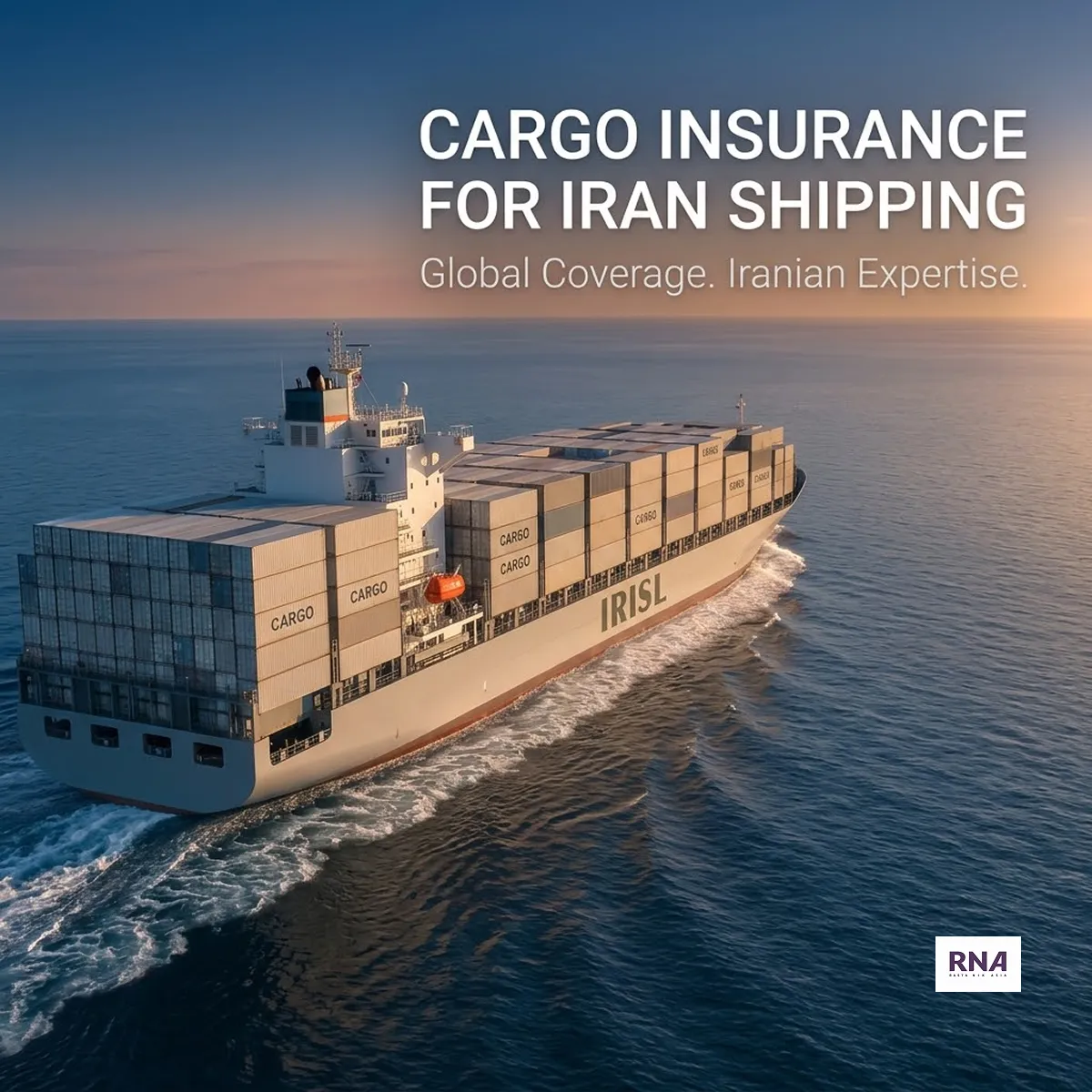 Step-by-Step: How to Get Cargo Insurance for Iran Shipping
Follow these steps to make sure your cargo is protected before it leaves the port of origin.
Step 1: Determine Your Incoterms
Your insurance responsibility depends on your sales contract and the agreed Incoterms.
- Under CIF (Cost, Insurance, and Freight) and CIP (Carriage and Insurance Paid To), the seller must arrange and pay for insurance.
- Under FOB (Free on Board) or EXW (Ex Works), the buyer is responsible for arranging insurance.
Always check your contract carefully to avoid gaps in coverage.
Step 2: Coordinate with Your Iranian Partner
Only companies holding a valid Iranian Commercial Card can complete the import registration process. Consult your local partner or a professional freight forwarder, such as Rasta Nik Asia, to confirm whether a local insurance policy is required for your specific HS Code. Requirements vary by product category.
You can contact us today for a free, professional consultation.
Step 3: Check for Sanction-Compliant Clauses
Make sure your policy includes a sanction-compliant clause. This ensures your insurer can legally process claims, payments, and cargo surveys inside Iran without violating international banking or sanctions regulations. Without this clause, claim settlement can become complicated or stall entirely.
Step 4: Issue the Insurance Certificate
After paying the premium, you will receive an Insurance Certificate. This document must exactly match your Bill of Lading (BoL) and Commercial Invoice. The description of goods, HS Code, weight, and insured value all need to be identical.
Any difference between these documents can cause delays during customs inspection and clearance. If you need more information about transit documents in Iran, you can read our complete guide on "Key Freight Documents in Iran".
What Affects Your Premium
Insurance premiums for Iran shipments are not fixed; insurers price them based on several factors:
- Cargo type and value: perishable food and electronics typically cost more to insure than bulk minerals.
- Route and mode: sea freight through the Gulf of Oman, rail via the North-South Corridor, or road transit through border terminals each carry different risk profiles.
- Packaging standard: goods packed to ISPM-15 or industry-specific standards often qualify for better rates.
- Coverage level: All Risks costs more than FPA, but the gap is usually smaller than traders expect.
Discussing these factors with your freight forwarder before booking insurance can help you avoid overpaying or under-insuring.
Filing a Claim: What to Do if Damage Occurs
Even with the best Cargo Insurance for Iran Shipping, accidents can still happen. If your cargo arrives damaged at a land border like Astara Border Terminal or at a port such as Port of Chabahar, act quickly and follow the correct procedure to protect your claim.
1. Notify Immediately
Most Cargo Insurance for Iran Shipping policies give you 24 to 72 hours to notify the insurer after discovering damage. Do not wait until the cargo reaches the final warehouse. Immediately inform:
- Your insurance provider
- Your freight forwarder
- The shipping line (if applicable)
Late notification can reduce compensation or even invalidate your claim.
2. Understand the "Sue and Labor" Clause
Under most marine insurance contracts, you're legally required to take reasonable steps to prevent further damage. For example:
- Move wet cargo to a dry storage area
- Separate damaged goods from undamaged items
- Protect exposed cargo from weather conditions
These actions are called mitigation measures, and insurers usually reimburse these costs under the “Sue and Labor” clause.
3. Document Everything with Clear Evidence
In 2026, digital documentation is essential for successful claims under Cargo Insurance for Iran Shipping. Make sure to:
- Take high-resolution photos of container seals before opening
- Record video during unloading
- Capture clear images of packaging and damaged goods
- Enable GPS location and timestamp on your device
Proper documentation can significantly speed up your claim approval.
4. Cooperate with the Appointed Surveyor
Your insurer will likely appoint a local surveyor, such as representatives from SGS or regional marine experts like Star Marine. Fully cooperate and ensure that the survey report includes:
- Verified container seal numbers
- Detailed description of visible damage
- Quantity of affected goods
- Condition of packaging
The Survey Report is one of the most critical documents when processing claims related to Cargo Insurance for Iran Shipping. Proper coordination at this stage can make the difference between a fast settlement and a long dispute.
Practical Examples for Global Traders to Get Cargo Insurance for Iran Shipping
- For Indian Rice Exporters: If your rice is contaminated by seawater due to a container leak, a WA (With Average) policy will cover the loss. An FPA policy would likely deny the claim because the ship itself did not sink.
Learn more: Shipping Goods from Iran to India - For CIS Machinery Traders: If a specialized pump is dropped during unloading at the border, only an All Risks policy will cover the "accidental damage during handling."
Conclusion: Secure Your Trade with Cargo Insurance for Iran Shipping
Getting the right Cargo Insurance for Iran Shipping can be the difference between a successful trade and a serious financial loss. By choosing the appropriate coverage level, whether FPA (Free of Particular Average) for bulk cargo or All Risks for food and sensitive goods, and making sure your documents fully comply with Iranian customs requirements, you protect not only your shipment but also your company’s long-term stability.
Proper Cargo Insurance for Iran Shipping is not just a formality. It is a strategic decision that safeguards your cash flow, your contracts, and your reputation in competitive markets.
At Rasta Nik Asia, we do more than transport cargo; we actively manage risk. Our team understands the operational and regulatory complexities of the International North-South Transport Corridor and the specific concerns of traders from China, India, and the CIS region.
From insurance coordination to customs alignment and transit supervision, we ensure your cargo moves through Iran safely, compliantly, and efficiently. Would you like us to review your current shipping documents or provide a competitive insurance quote for your next shipment to Iran? Contact our expert team today.
resources
What is cargo insurance and what does it cover?