

When you ship goods through Iran, understanding Freight Fees in Iran is not optional. It directly affects your profit margin, pricing strategy, and delivery timeline.
For traders from CIS countries, India, China, Turkey, and the UAE, Iran is a key transit route. Whether your cargo moves through Bandar Abbas, crosses land borders to Central Asia, or follows the North–South corridor, you must clearly understand all Freight charges in Iran before you sign a contract.
Whether you are moving industrial machinery or perishable food items, logistics costs are a major variable in your business model. At Rasta Nik Asia, we believe that transparency is the first step to a reliable partnership. This guide explains how these costs are structured and why a tailored approach is the only way to get an accurate price.
What Are Freight Fees in Iran?
Freight Fees in Iran are all costs related to moving your cargo inside Iran or through Iran as a transit country. These fees may include:
- Ocean freight costs
- Inland trucking charges
- Port handling fees
- Terminal handling charges (THC)
- Customs clearance fees
- Documentation charges
- Transit permits
- Insurance costs
- Border fees
Many traders focus only on the main shipping rate. But real Freight charges in Iran include many small components. If you ignore them, your total cost may increase by 10–25%.
Why Understanding Freight Charges in Iran Is Critical for Traders?
Iran connects the Persian Gulf to Central Asia and Russia. It is part of the International North–South Transport Corridor (INSTC). Because of this strategic position, Freight Fees in Iran are influenced by:
- Port congestion
- Sanctions-related banking processes
- Fuel price adjustments
- Border waiting times
- Seasonal demand
If you trade food, temperature-sensitive goods, or industrial equipment, unexpected Freight charges in Iran can reduce your competitiveness.
Main Components of Freight Fees in Iran
When planning your shipment, it is important to realize that Freight Fees in Iran are not a flat rate. Let’s break down the most important elements of Freight charges in Iran.
1. Transport Mode and Route Selection
The method of transport is the biggest factor in your total cost. Sea freight through Bandar Abbas remains the primary entry point for international goods. However, once the cargo arrives, the choice between road and rail significantly impacts your budget.
With the recent upgrades to the Iranian rail network in 2026, heavy industrial goods can often move more efficiently by train and rail freight, whereas time-sensitive food exports may require specialized trucking services.
Learn more: Truck transport from Iran to CIS
2. Port Handling and Terminal Charges
When your container arrives at the port, you pay:
- Terminal Handling Charges (THC)
- Port storage fees
- Container unloading fees
- Documentation service charges
These fees are regulated but can vary depending on how long your cargo stays at the port. Efficient document preparation is essential to keep these Freight Fees in Iran from escalating due to delays.
3. Customs and Documentation
Iran’s strategic location comes with specific regulatory requirements. Transit declarations, insurance, and compliance with international trade standards all carry administrative costs. Because these requirements change based on the destination and the nature of the goods, Freight Fees in Iran are highly specific to each shipment.
Learn more: Customs Clearance in Iran
Because Freight Fees in Iran depend entirely on the specific nature of your cargo and the chosen route, please contact us at Rasta Nik Asia for a personalized price based on your needs.
4. Insurance and Risk Management Costs
Cargo insurance is not optional. For food, livestock feed, frozen meat, or industrial machinery, insurance protects your investment. Freight insurance is a small percentage of the total value, but it is part of the real Freight charges in Iran. Without it, one incident can cause major loss.
What Affects Freight Fees in Iran?
Understanding what influences Freight Fees in Iran helps you plan better and avoid unexpected costs. These fees are not random. They are based on real operational, economic, and regulatory factors that change over time.
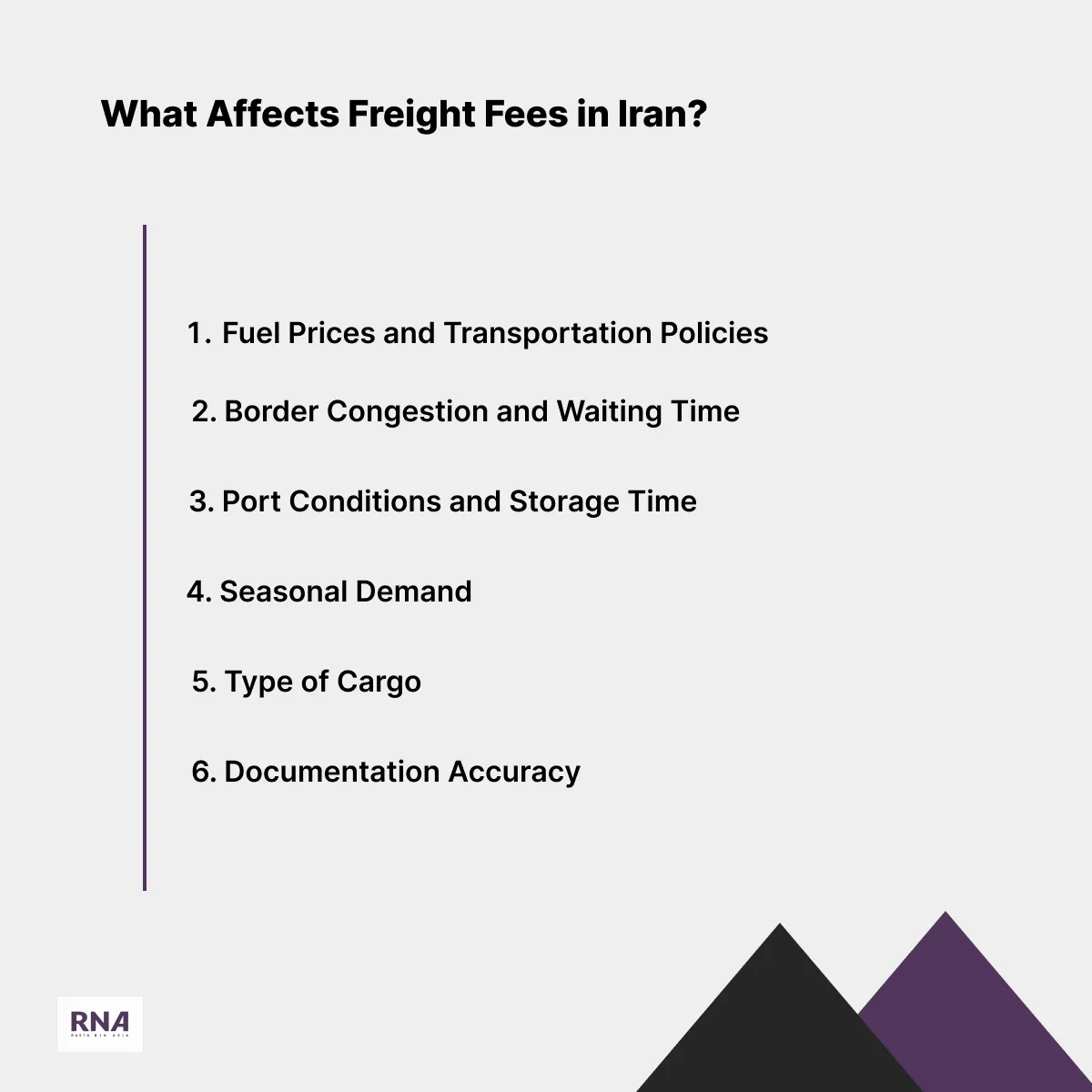
Below are the most important elements that affect Freight charges in Iran:
1. Fuel Prices and Transportation Policies
Fuel is a major cost in road transport. Any change in fuel pricing or government transport regulations directly impacts inland trucking rates. Since road transport is a large part of Freight charges in Iran, even small fuel adjustments can increase total costs.
2. Border Congestion and Waiting Time
Iran is a key transit country for CIS, Turkey, and Gulf routes. During peak seasons, trucks may wait several days at borders. Extra waiting time leads to demurrage, detention, and driver standby charges which increase Freight charges.
3. Port Conditions and Storage Time
If a container stays longer than the free time allowed at port, storage charges apply. Port congestion, documentation delays, or inspection procedures can increase total Freight Fees in Iran significantly.
4. Seasonal Demand
Agricultural export seasons, construction peaks, and regional trade surges create high demand for trucks and containers. Higher demand often means higher Freight charges in Iran, especially for reefer and specialized equipment.
5. Type of Cargo
Different goods require different handling:
- Food cargo may need temperature control and health inspections
- Livestock feed may require special documentation
- Heavy industrial cargo may need special trailers or permits
6. Documentation Accuracy
Incorrect invoices, HS codes, or transit documents can cause inspections or clearance delays. Delays increase storage, handling, and trucking standby costs which raising overall Freight charges in Iran.
Working with an experienced logistics partner ensures these variables are managed professionally, with clear reporting and no surprises.
Freight Fees in Iran for Food, Livestock, and Industrial Cargo
Not all cargo is treated equally. The "type" of goods you are moving is perhaps the most significant variable in determining your final invoice.
Food and Perishable Goods
For the food sector, maintaining the cold chain is non-negotiable. Refrigerated (reefer) containers require specialized equipment and constant monitoring. These requirements mean that Freight Fees in Iran for food products will differ from standard dry cargo.
Livestock and Agricultural Trade
Transporting live animals must follow strict health rules and special transit permits. Shipping livestock is more complicated and needs careful coordination at land borders to protect the animals’ welfare and make sure the delivery is done quickly.
Industrial and Heavy Machinery
Oversized or heavy industrial equipment often requires "Breakbulk shipping" or specialized flat-rack containers. These shipments require custom route planning to ensure bridges and roads can handle the weight, which directly influences the Freight Fees in Iran.
Since Freight charges in Iran are depending on the cargo and its specific requirements, if you want a price, you can contact us to receive a detailed breakdown for your project.
How to Reduce Freight Charges in Iran
You cannot avoid Freight Fees in Iran, but you can control them. Here is how:
- Work with a Reliable Local Partner: A company with agents at all major borders can prevent delays. Delays increase Freight charges in Iran.
- Book Early During Peak Seasons: Advance booking locks better trucking rates and reduces sudden increases in Freight Fees in Iran.
- Prepare Accurate Documentation: Wrong HS code or invoice value leads to inspections. Inspections increase storage and Freight charges in Iran.
- Choose the Right Transport Mode: Sometimes multimodal transport (combining sea, rail and road) reduces total Freight Fees in Iran.
Why Transparency Matters in Freight Charges in Iran
One of the biggest problems traders face is unclear reporting. Some companies provide low initial rates but add extra Freight Fees in Iran later.
At Rasta Nik Asia, we focus on:
- Clear reporting
- Real-time updates
- Detailed cost breakdown
- Always available communication
This approach builds trust and protects you from unexpected Freight charges in Iran. You can contact us today to get more detailed information.
Conclusion
Iran is a powerful transit bridge between the Gulf and Central Asia. But successful trade depends on understanding real Freight Fees in Iran. When you clearly understand all Freight charges in Iran, you:
- Protect your profit margin
- Avoid hidden costs
- Deliver on time
- Build trust with your buyers
At Rasta Nik Asia, we do not just move cargo. We manage every part of your Freight Fees in Iran with transparency, accuracy, and constant reporting. Please remember that Freight Fees in Iran are depending on the cargo. If you are shipping food, livestock products, or industrial goods through Iran, contact our team today to speak with a specialist who can provide an accurate quote for your specific trade route.
Resources
Freight charges & freight fees explained