

Afghanistan has no coastline. Every container, truckload, or bulk shipment that reaches the country by sea must first pass through a neighboring transit country. For most international traders, transit to Afghanistan via Iran is the most practical and reliable way to move cargo, because Iran offers direct port access, three working land borders, and shorter overland distances than routes through Pakistan or Central Asia.
In this guide, we explain exactly how transit to Afghanistan via Iran works in practice: which border crossings and ports to use, what documents you need, how long the journey takes, and where shipments usually run into trouble. It is written for freight forwarders, importers, and exporters who move goods between Iran and Afghanistan, whether the cargo starts in the UAE, India, China, Turkey, or a CIS country.
Why Iran Is the Main Transit Corridor to Afghanistan
Afghanistan's trade options are limited by geography and by the political relationship with its neighbors. Pakistan controls the shortest sea route through Karachi, but border closures, security incidents, and strained bilateral relations have made that corridor unpredictable in recent years. This has pushed a growing share of Afghan import and export cargo toward Iran instead.
Three factors make transit to Afghanistan via Iran the preferred option for many traders:
- Port access: Iran's southern ports connect directly to the Persian Gulf and the Indian Ocean, so ocean cargo does not need to transship through a third country before reaching the Afghan border.
- Shorter overland distance: The road distance from Iran's main ports to western Afghanistan is significantly shorter than routes running through Central Asia.
- Established infrastructure: Iran has decades of experience handling Afghan transit cargo, along with dedicated customs terminals, bonded warehouses, and TIR-compliant transport companies at every major border point.
Afghanistan is a landlocked country, so under international transit conventions it has the legal right to move goods through neighboring territory without paying import duties in the transit country. Iran and Afghanistan operate this transit relationship under bilateral transit agreements, supported by the TIR Carnet system for road cargo moving under customs seal.
Learn more: Transit to CIS Countries via Iran
Main Border Crossings for Transit to Afghanistan via Iran
Cargo moving overland between Iran and Afghanistan uses one of three official border crossings. Each connects a different part of Iran to a different Afghan province, so the right choice depends on where your cargo enters Iran and where it needs to go in Afghanistan.
Islam Qala – Dogharoun (Herat–Mashhad Route)
This is the busiest and most reliable crossing for transit to Afghanistan via Iran. It connects Dogharoun in Iran's Razavi Khorasan province with Islam Qala in Afghanistan's Herat province, roughly linking the Iranian city of Mashhad with Herat.
- Handles the largest share of commercial road freight between the two countries
- Well-developed customs terminal with regular truck traffic
- Connects to Herat, Afghanistan's main western trade hub, and onward routes to Kabul and Kandahar
- The most practical entry point for cargo destined for western and central Afghanistan
Milak – Zaranj (Sistan-Baluchestan–Nimruz Route)
This crossing links Milak in Iran's Sistan-Baluchestan province with Zaranj in Afghanistan's Nimruz province, joined by the Silk Bridge over the Hirmand River. It is the shortest route for cargo coming from Iran's southeastern ports, including Chabahar.
- Direct connection to the Zaranj–Delaram highway, which links to Afghanistan's national ring road
- A second crossing route is under development to raise daily transit capacity, reflecting steady growth in cargo volumes at this border
- Best suited for shipments heading to southern and southwestern Afghanistan, or continuing on to Kandahar
Mahirood – Abu Nasr Farahi (Farah Route)
The smallest of the three crossings, located between Iran's South Khorasan province and Afghanistan's Farah province. It carries far less traffic than the other two and is generally used only when the main crossings are congested or when the destination is closer to Farah province.
Comparison of Iran–Afghanistan Border Crossings
| Crossing | Iranian Side | Afghan Side | Best For | Traffic Volume |
|---|---|---|---|---|
|
Islam Qala – Dogharoun |
Razavi Khorasan (near Mashhad) | Herat Province | Western & central Afghanistan | Highest |
|
Milak – Zaranj |
Sistan-Baluchestan | Nimruz Province | Southern Afghanistan, cargo from Chabahar |
Growing |
|
Mahirood – Abu Nasr Farahi |
South Khorasan | Farah Province | Overflow / regional cargo |
Lowest |
Practical tip: Before booking a route, confirm current operating hours and any temporary restrictions with your freight forwarder. Border operating hours, security conditions, and customs procedures on the Afghan side can change with little notice, so a forwarder with an active presence at the crossing is far more reliable than relying on outdated online information.
Planning to ship cargo to Afghanistan through Iran? Let Rasta Nik Asia help you choose the most efficient border crossing, manage customs procedures, and minimize transit delays. Get in touch with our logistics experts today for a customized freight solution and a competitive shipping quote.
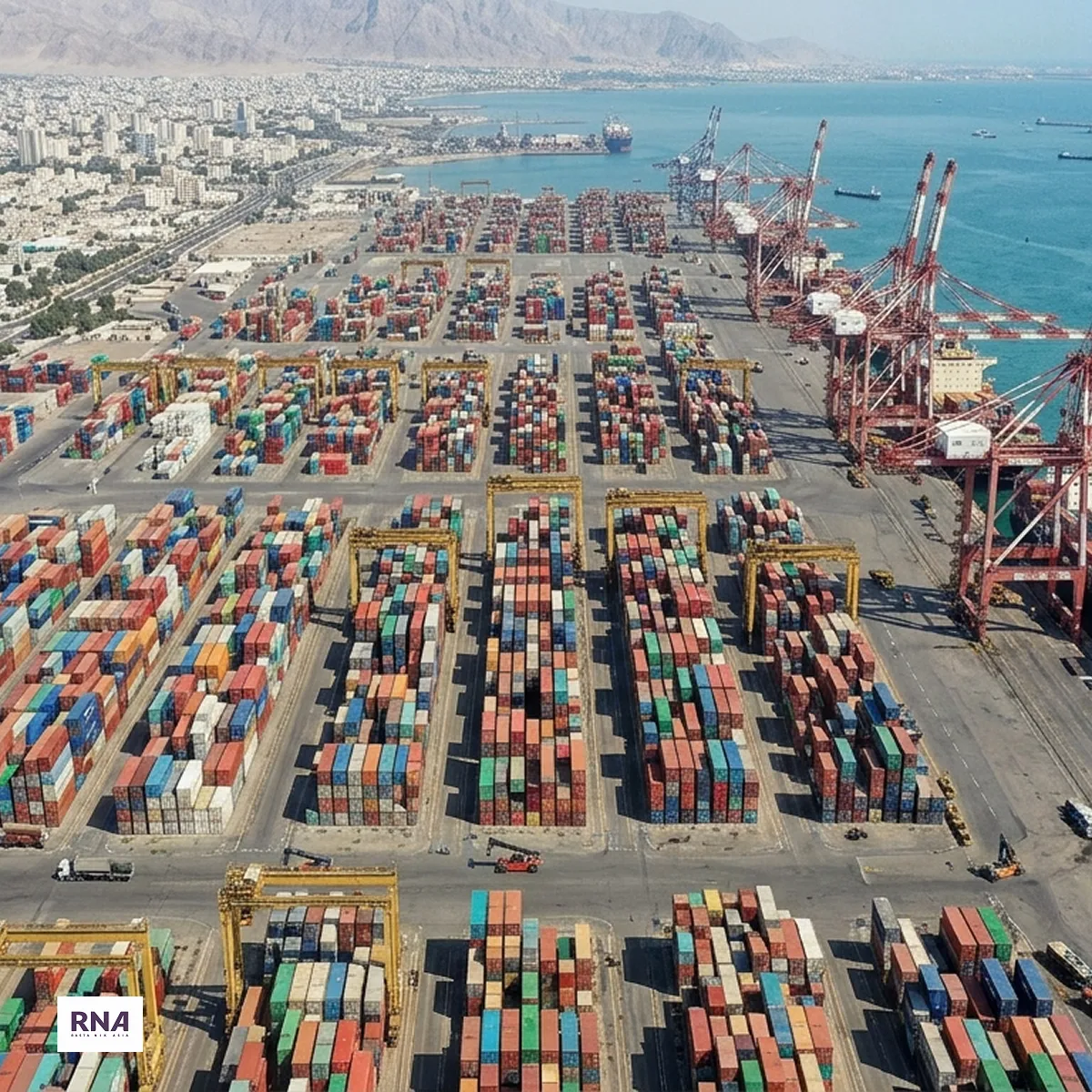 From Iranian Ports to the Afghan Border: The Sea-to-Land Route
Most international cargo bound for Afghanistan does not start in Iran. It arrives by sea and then continues overland, which means the choice of Iranian port is just as important as the choice of border crossing.
Route 1: Bandar Abbas (Shahid Rajaee Port)
Shahid Rajaee Port at Bandar Abbas is Iran's largest container port and handles the majority of transit cargo entering the country from international shipping lines. Cargo unloaded here typically moves by road or rail across Iran to the Islam Qala–Dogharoun border, then on to Herat.
- Handled by the largest number of shipping lines calling at Iran, giving importers more routing and scheduling flexibility
- Well-established customs clearance and transit procedures for TIR-bonded cargo
- The most common port choice for containerized transit to Afghanistan via Iran from Asia, Europe, and the Gulf
Route 2: Chabahar Port
Chabahar, on Iran's southeastern coast, is the country's only deep-water port with direct access to the Indian Ocean, avoiding the Strait of Hormuz. It was developed in part through a trilateral transit agreement between India, Iran, and Afghanistan, aimed at giving India a sea-based trade route to Afghanistan that does not pass through Pakistan.
- Shorter overland distance to the Milak–Zaranj border than from Bandar Abbas
- Positioned as part of the wider International North–South Transport Corridor (INSTC), linking South Asia to Central Asia and Russia through Iran
Current status: Chabahar's role in third-country trade has been affected by shifting international sanctions arrangements in 2026, which has created uncertainty for some shippers routing cargo through the port. Traders planning shipments through Chabahar should confirm current sanctions exposure and documentation requirements with their forwarder and legal or compliance advisor before booking, as conditions have changed more than once this year.
For most commercial shippers today, Bandar Abbas remains the more predictable entry point for transit to Afghanistan via Iran, while Chabahar is best evaluated case by case depending on cargo origin, buyer requirements, and current trade restrictions.
How Transit to Afghanistan via Iran Works: A Step-by-Step Guide
- Cargo arrives at an Iranian port (typically Bandar Abbas) or enters Iran by land from a neighboring country.
- Customs registration under transit status: The shipment is declared as transit cargo, not import cargo, so it is not subject to Iranian import duties. This requires a transit permit issued through Iran's customs authority.
- TIR Carnet or bonded transport documentation: Road cargo usually moves under a TIR Carnet, which allows sealed trucks to cross international borders with minimal intermediate inspection.
- Inland transport across Iran: Cargo moves by truck, rail, or a combination of both, to the chosen border crossing.
- Exit customs at the Iranian border post (Dogharoun, Milak, or Mahirood), where the transit documentation is checked against the seal and manifest.
- Entry customs on the Afghan side, where Afghan customs authorities process the shipment for entry or further transit within Afghanistan.
- Final delivery to the consignee in Herat, Kabul, Kandahar, Mazar-i-Sharif, or another destination, either directly by the same carrier or through a second inland transport leg.
Working with a freight forwarder that has representatives on both sides of the border shortens this process considerably, because customs paperwork can be prepared in advance rather than assembled at the crossing.
Our experienced team coordinates every stage of the customs and border process through trusted local representatives, helping you save time and avoid unnecessary delays. Request a customized logistics solution today and let us find the most efficient route for your cargo.
Transit Times and Distances
Transit times for shipments moving through Iran to Afghanistan vary by port of entry, border crossing, cargo type, and current border conditions. The figures below are typical ranges for standard commercial cargo moving under normal conditions.
| Route Segment | Approx. Distance | Typical Transit Time |
|---|---|---|
| Bandar Abbas Port to Islam Qala–Dogharoun border | ~1,500 km | 3–5 days |
| Chabahar Port to Milak–Zaranj border | ~950 km | 2–4 days |
| Dogharoun border to Herat | ~120 km | Same day |
| Zaranj border to Zaranj city | Local | Same day |
| Full sea-to-Herat transit (from Bandar Abbas) | — | 7–14 days, depending on port dwell time and customs processing |
These are planning estimates, not guarantees. Seasonal weather, security conditions on the Afghan side, and customs backlogs at any point in the chain can extend transit time. Building in a buffer of several extra days is standard practice for shipments with firm delivery deadlines.
Required Documents for Afghanistan Transit Shipments
A complete and accurate freight document set is the single biggest factor in avoiding delays. For most road shipments moving as transit to Afghanistan via Iran, you will need:
- Bill of Lading or CMR waybill, matching the cargo description exactly
- TIR Carnet, for sealed road transport across the border
- Transit permit/transit declaration, issued by Iranian customs (IRICA)
- Commercial invoice and packing list, in the format required by both Iranian and Afghan customs
- Certificate of origin, where required by the Afghan importer or by trade agreements
- Insurance certificate, covering the cargo for the full transit journey (ICC (A)/All Risks coverage is standard for high-value goods)
- Afghan import permit or trade license details for the consignee, required for customs clearance on entry
Any mismatch between the invoice value, the packing list, and the physical cargo is one of the most common reasons for delay at Iranian and Afghan customs checkpoints. Having your forwarder review documents before the cargo departs the origin port saves far more time than trying to correct paperwork at the border.
Common Challenges in Afghanistan Transit and How to Avoid Them
- Border congestion: Islam Qala–Dogharoun, being the busiest crossing, can see queuing delays during peak trading periods. Where possible, build flexibility into your schedule or discuss routing part of the cargo through Milak–Zaranj.
- Incomplete or inconsistent documentation: Discrepancies between commercial invoices, packing lists, and the TIR Carnet manifest trigger manual inspection, which adds days to the process. Standardize your documentation templates with your forwarder before shipping regularly.
- Changing security conditions: Conditions along Afghan approach roads can shift with little notice. A forwarder with local drivers and border representatives, rather than a subcontracted third party, will generally have more current information and more flexibility to reroute if needed.
- Sanctions and compliance checks: Trade with and through Iran is subject to layers of international sanctions compliance, and rules affecting specific ports, banks, or goods categories can change during the year. Confirm current restrictions with your compliance team before finalizing any shipment, particularly for cargo routed through Chabahar.
- Currency and payment logistics: Iranian banking restrictions mean payment for transit and freight services is often structured differently than in unrestricted trade lanes. Agree on payment terms and currency in advance to avoid delays at the invoicing stage.
Multimodal Transport Options: Road, Rail, and Combined Transit
Most cargo moving as transit to Afghanistan via Iran travels entirely by road, since Afghanistan's rail network is minimal and Iran's rail lines toward the eastern border are still developing. However, multimodal combinations are becoming more common for Afghanistan transit:
- Sea + Road: This multimodal transportation method is the standard option: ocean freight to an Iranian port, then trucking to the border and into Afghanistan.
- Sea + Rail + Road: Where rail infrastructure allows, cargo can move part of the inland Iranian leg by rail before switching to road for the final border crossing, reducing cost on high-volume shipments.
- Road-only: Cargo already inside Iran, or arriving overland from Turkey or a CIS country, can move directly by truck to the Afghan border without a port leg.
Choosing the right combination depends on cargo type, volume, budget, and delivery deadline. Bulk and lower-value goods often benefit from rail where available, while time-sensitive or high-value shipments generally move fastest by direct road transport under TIR.
Why Work With an Experienced Freight Forwarder
Transit to Afghanistan via Iran involves more moving parts than a standard cross-border shipment: two customs regimes, a TIR-bonded transport leg, sanctions compliance checks, and border conditions that can change quickly. A freight forwarder with an established network at Iran's ports and at all three Afghan border crossings can:
- Prepare and check transit documentation before cargo departs, reducing the risk of delays
- Choose the most efficient route and border crossing based on current conditions, not outdated assumptions
- Provide real-time shipment tracking and transparent status updates throughout the journey
- Coordinate with trusted local transport companies and drivers on both sides of the border
- Advise on current sanctions and compliance requirements before you commit to a route
This combination of local presence, communication, and up-to-date route knowledge is what separates a smooth transit shipment from one that sits at the border for weeks.
Need a reliable partner for cargo transit to Afghanistan? Rasta Nik Asia combines local expertise, trusted border representatives, and real-time route intelligence to keep your shipments moving efficiently. Contact our logistics specialists today to discuss your cargo and receive a tailored transit solution.
Conclusion
Transit to Afghanistan via Iran remains the most practical route for most international traders moving cargo into this landlocked market. With three working border crossings, established port infrastructure at Bandar Abbas and Chabahar, and a mature TIR-based transit system, Iran offers a shorter and more developed corridor than the alternatives.
The route does require careful planning: choosing the right port and border crossing, preparing complete documentation, and staying current on sanctions and security conditions. Working with a freight forwarder who has an active presence at every stage of the journey is the most reliable way to keep shipments moving and avoid costly delays.
Contact our logistics experts today for a tailored shipping solution and a competitive freight quote.