

Choosing between FCL vs. LCL in Iran is one of the most important logistics decisions for international traders using Iran as a transit or export route. The wrong choice can increase costs, cause delays, or expose your cargo to unnecessary risks. The right choice can save time, protect your goods, and improve supply chain efficiency.
For traders shipping food products, livestock-related goods, raw materials, or industrial cargo through Iran, understanding FCL vs. LCL Shipping is essential.
In this guide, we breaks down FCL vs. LCL shipping in a clear, practical, and decision-focused way. No theory. No fluff. Just real-world logistics insight from an on-the-ground Iranian freight partner.
Understanding the Basics: What Is FCL and LCL?
Before comparing FCL vs. LCL in Iran, let’s clarify the basics.
What Is FCL shipping (Full Container Load)?
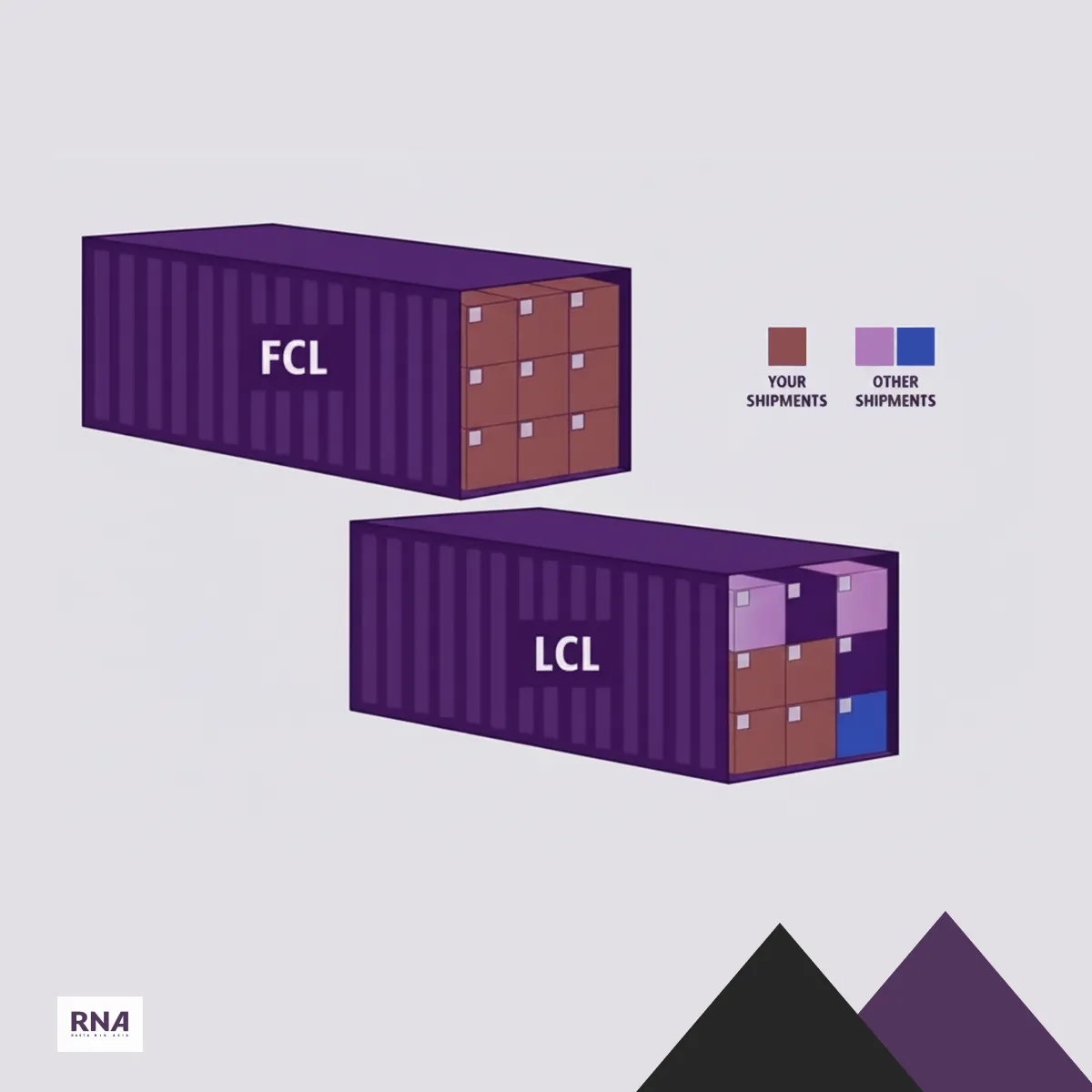
FCL means your cargo occupies one full container, even if it is not completely full. The container is sealed at origin and opened only at the final destination. Key features of FCL shipping are:
- One shipper, one consignee
- No cargo mixing
- Faster handling
- Lower risk of damage
What Is LCL (Less than Container Load)?
LCL means your cargo shares a container with goods from other shippers. The container is consolidated and deconsolidated at freight hubs. Key features of LCL shipping are:
- Shared container space
- Lower cost for small volumes
- More handling steps
- Longer transit time
When comparing FCL vs. LCL Shipping, volume, cargo type, time sensitivity, and risk tolerance matter most.
Why FCL vs. LCL in Iran Requires Special Attention
Iran is not just another transit country. It is a strategic logistics corridor connecting South Asia, the Middle East, CIS, and Europe. However, local regulations, customs processes, and infrastructure make FCL vs. LCL in Iran a decision that must be handled carefully.
Iran’s Logistics Reality:
- Multiple borders (Turkey, Azerbaijan, Armenia, Turkmenistan, Pakistan)
- Key ports: Bandar Abbas, Bandar Imam Khomeini, Chabahar
- Heavy use of multimodal transport (sea + road + rail)
- Sensitive customs and documentation requirements
Because of this, FCL vs. LCL Shipping decisions in Iran directly impact clearance speed, transit reliability, and total landed cost.
Learn more: Complete guide to sea freight shipping from Iran
FCL vs. LCL in Iran: Side-by-Side Comparison
 Cost Structure and Real-World Expenses
With FCL (Full Container Load), you pay a fixed price for the entire container. Even if the container is not completely full, the total cost is usually easier to control. There are no consolidation or deconsolidation fees, and fewer local handling charges inside Iranian ports.
FCL cost advantages include:
- Predictable pricing with fewer surprise fees
- Lower cost per cubic meter for medium and large shipments
- No shared port or warehouse expenses
With LCL (Less than Container Load), the pricing model looks cheaper at first. You pay only for the space you use, but additional charges often appear during handling and customs processes in Iran.
LCL costs often increase due to:
- Consolidation and warehouse handling fees
- Deconsolidation costs at destination
- Local port charges that apply per shipment, not per container
In Iran, once your cargo reaches around 12–15 CBM, FCL is usually the more economical option.
Transit Time and Delivery Reliability
Transit time is one of the biggest differences in FCL vs. LCL Shipping, especially in Iran.
- With FCL, the container moves as a single shipment from origin to destination. There is no waiting for other cargo, and the container is handled fewer times. This makes transit times shorter and more reliable, particularly for routes passing through multiple Iranian borders.
- With LCL, your cargo must wait for consolidation before departure and for deconsolidation after arrival. Any delay related to another shipper can affect the entire container.
If delivery time matters, FCL is usually the safer choice in FCL vs. LCL in Iran.
Learn more: FTL vs LTL in Iran
Cargo Safety and Risk Management
Cargo safety becomes critical when shipments pass through busy ports and border crossings.
- In FCL shipping, the container is sealed once and opened only at the final destination. This reduces handling, limits exposure, and lowers the risk of damage, loss, or contamination. This is especially important for food products and industrial goods.
- In LCL shipping, cargo is loaded, unloaded, and moved multiple times. It also shares space with other shipments, which increases risk.
For sensitive or regulated goods, FCL clearly wins in FCL vs. LCL Shipping through Iran.
Learn more: Dangerous Goods Shipping Through Iran
Customs Clearance and Border Inspections
With FCL, customs clearance is simpler. There is one shipper, one consignee, and one complete set of documents. Iranian customs officers can inspect and release the container faster, especially for transit cargo.
With LCL, several shippers share the same container. If one shipment has document issues, missing permits, or valuation problems, the entire container may be delayed.
At Rasta Nik Asia, we often see LCL shipments delayed due to problems unrelated to the client’s cargo. This is one of the biggest hidden risks in FCL vs. LCL Shipping through Iran.
Multimodal Transport Inside Iran
Iran is a key hub for sea–road–rail multimodal transport, and this strongly affects FCL vs. LCL Shipping decisions.
FCL containers are easier to move between transport modes. They can quickly shift from port to road or rail, which is ideal for INSTC routes and transit to CIS countries.
LCL shipments, however, are less flexible. They often require additional handling at inland terminals, increasing the risk of delays.
FCL works better for:
- India to CIS routes
- China to Central Asia transit
- Long-distance or multi-border shipments
Visibility, Control, and Communication
Control over your shipment matters, especially when trading across borders.
- With FCL, tracking is clearer, responsibility is well defined, and issues are easier to resolve. You know exactly where your cargo is and who is responsible at each stage.
- With LCL, visibility depends heavily on the consolidator. Communication is slower, and responsibility can become unclear if damage or delay occurs.
When Does LCL Make Sense in Iran?
Despite the risks, LCL can still be a valid option in FCL vs. LCL in Iran under specific conditions:
- Cargo under 5 CBM
- Non-urgent shipments
- Low-value goods
- Experienced local logistics partner
Without strong local coordination, LCL in Iran can quickly become expensive and slow.
Quick Decision Guide: LCL or FCL?
Choose FCL in Iran if:
- Your cargo volume is medium or large
- Goods are sensitive, valuable, or regulated
- Time and reliability are important
- You are using Iran as a transit corridor
Choose LCL in Iran if:
- Your shipment is very small
- Delivery time is not critical
- Goods are low value and non-sensitive
- You have a trusted local logistics partner
Still unsure which option fits your shipment?
At Rasta Nik Asia, we analyze your cargo type, volume, route, and timeline before recommending FCL or LCL shipping. Contact our logistics team today for a clear, honest decision; so you avoid hidden costs, delays, and unnecessary risks.
How Rasta Nik Asia Helps You Choose Correctly
At Rasta Nik Asia, we don’t sell “one-size-fits-all” shipping. We analyze your shipment before recommending FCL vs. LCL Shipping.
Our Advantage in FCL vs. LCL in Iran are:
- Direct presence at Iranian ports and borders
- Strong relationships with customs and carriers
- Clear, simple reporting
- Fast response and availability
- Proven experience with foreign traders
We help you choose FCL vs. LCL in Iran based on real cost, real risk, and real timelines and not assumptions. contact Rasta Nik Asia today to get a clear, practical recommendation for your next shipment through Iran and move your cargo with confidence.
Conclusion: Make the Right Choice with the Right Partner
Choosing between FCL vs. LCL in Iran is not just about price. It is about control, reliability, and trust. In a complex logistics environment like Iran, the wrong decision can cost far more than expected.
With Rasta Nik Asia, you gain:
- Local expertise
- Transparent reporting
- Fast problem-solving
- A logistics partner who protects your trade
Contact Rasta Nik Asia today to get a clear, honest recommendation on FCL vs. LCL Shipping for your next shipment through Iran and move your cargo with confidence.
Resource
LCL vs FCL - Choosing your Container Capacity