

International trade depends on reliable and cost-effective transportation. For importers, exporters, and manufacturers trading between India, China, Turkey, Russia, and CIS countries, rail freight in Iran offers an important option for moving goods across regional markets.
Iran has a strategic geographic position between the Persian Gulf, Central Asia, the Caucasus, and Turkey. Its railway network connects major industrial centers, ports, and international border crossings. These connections make Iran an important part of several regional transport corridors, including the International North-South Transport Corridor (INSTC).
Rail transport can be a practical solution for businesses shipping bulk commodities, industrial materials, and containerized cargo over long distances. However, the best route depends on the cargo type, destination, border conditions, and available railway services.
This guide explains how rail freight in Iran works, its main international connections, transportation advantages, and the factors businesses should consider when planning international rail shipments.
Why Rail Freight in Iran is a Strategic Choice
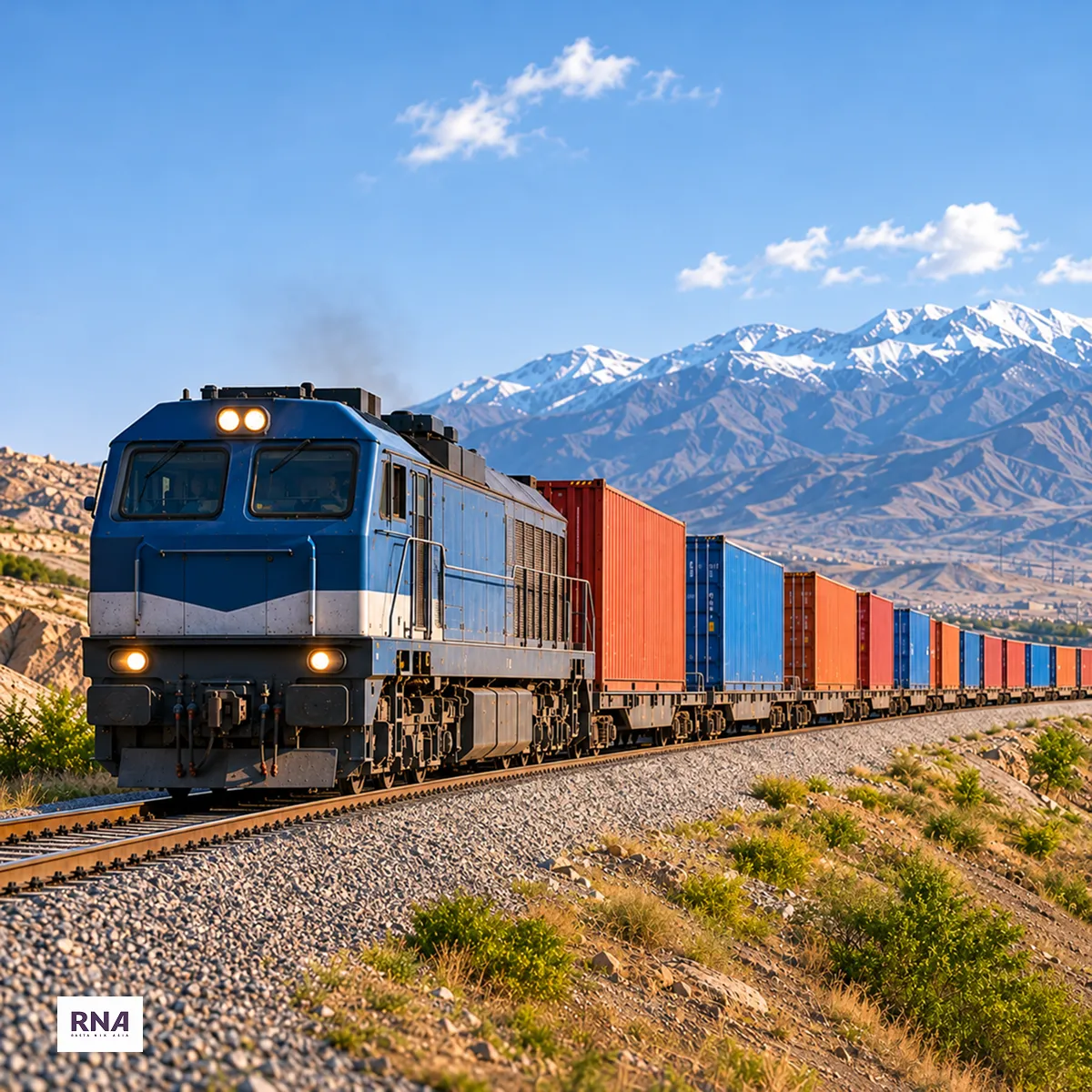
Iran's geographic location makes it an important transit country for international trade. It connects several major commercial regions and provides access to different transportation networks.
1- Iran’s Geographic Advantage
Iran is located between the Middle East, Central Asia, and the Caucasus. This position creates several opportunities for international cargo transportation. Its railway network connects southern ports and industrial cities to northern and western border crossings.
For international traders, these connections provide access to:
- CIS countries: Rail connections through Turkmenistan and Azerbaijan provide access to Central Asian and wider Eurasian markets.
- Turkey and Europe: The western railway connection through Razi and Kapıköy links Iran with Turkey and onward European rail networks.
- India and the Persian Gulf: Iranian ports and the country's inland transport network support cargo movement between South Asia, the Gulf region, and northern markets.
- China and Central Asia: Rail connections through Kazakhstan, Turkmenistan, and other regional countries provide an alternative route for cargo moving between China and Iran.
Compared with sea freight and air freight transportation, rail freight can provide a useful balance between transportation cost, capacity, and transit time.
Learn more: Shipping from Iran to China
2- Connection to International Transport Corridors
Iran’s rail system is part of several global trade networks:
- International North-South Transport Corridor (INSTC): The INSTC connects India, Iran, Russia, and other participating countries. It provides different transportation options, including rail, road, and maritime connections.
- East-West Transport Routes: Iran's railway connections with Turkey and Central Asia support east-west cargo movements. These routes can connect regional markets and provide alternatives for certain shipments between Asia and Europe.
These corridors make Iran one of the most reliable routes for East-West and North-South trade.
Advantages of Rail Freight in Iran
Rail transport offers several advantages for international businesses, especially those moving large volumes of cargo over long distances.
- Lower Costs: Rail is often cheaper than air transport and more reliable than road for large shipments. Businesses transporting commodities such as grain, steel, cement, and petrochemical products can benefit from railway capacity and the ability to move large quantities of cargo.
- Suitable for Large Shipments: Freight trains can transport substantial volumes of goods in a single operation. This makes rail a suitable option for bulk cargo and containerized shipments.
- Lower Environmental Impact: Rail transportation generally produces fewer carbon emissions per ton-kilometer than road freight.
- Access to Regional Markets: Iran's international railway connections provide access to several neighboring markets. Businesses can use these connections to transport cargo between Iranian ports, industrial centers, and international destinations.
- An Alternative to Road and Sea Transportation: Rail freight provides another transportation option when businesses need to evaluate different routes. Depending on the shipment, combining rail with road or sea transportation can improve route flexibility.
Rail freight transport in Iran is especially useful for traders who need consistent schedules and safe handling of high-value cargo.
Major International Rail Connections in Iran
Iran's railway network connects to several neighboring countries. These connections are important for international cargo movement.
1. Rail Connections to CIS Countries
Rail freight in Iran connects directly to Kazakhstan, Turkmenistan, and Azerbaijan, providing smooth transit to Russia and other CIS states. This makes it ideal for traders dealing in wheat, oil, and industrial machinery.
Two important border connections are:
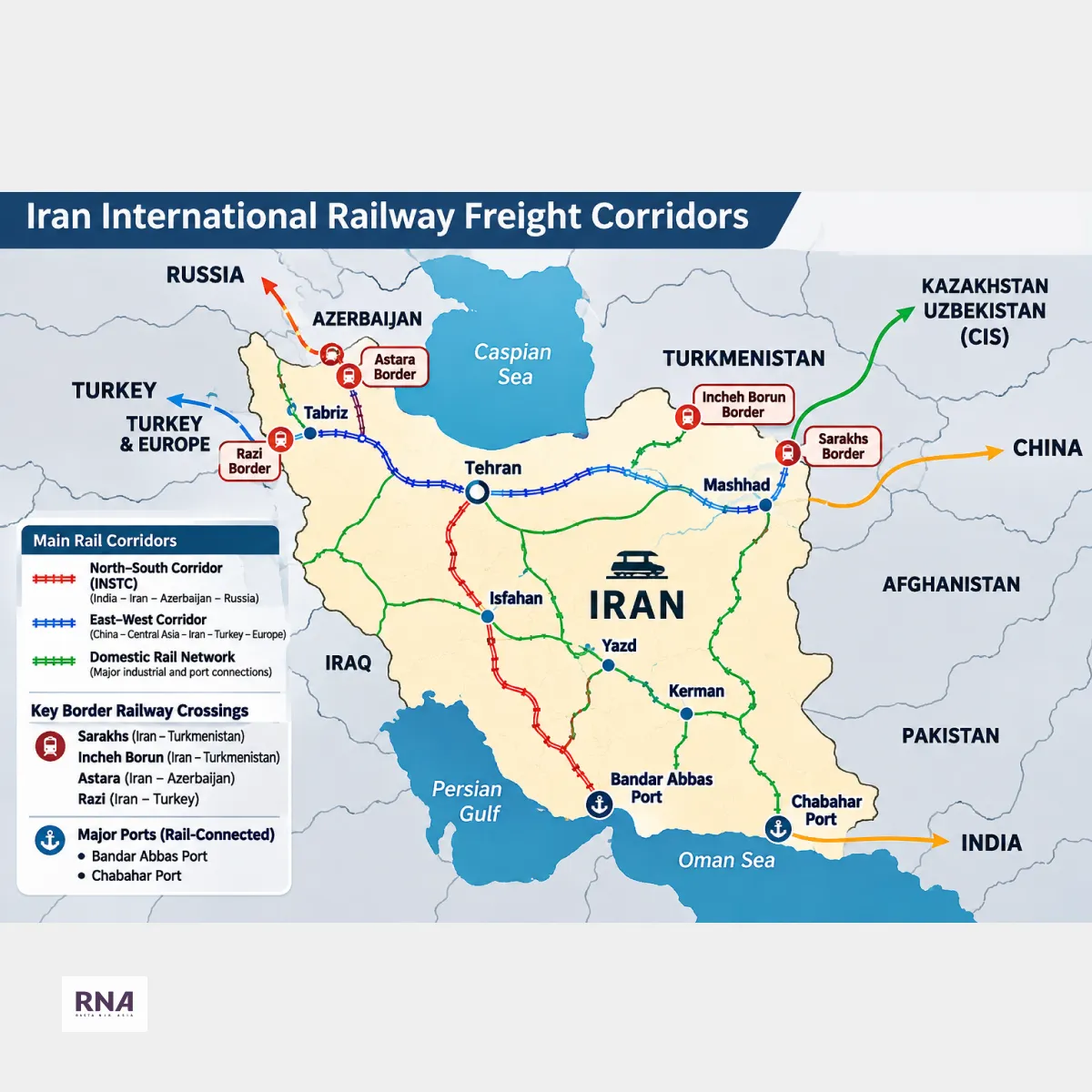
- Sarakhs Border (Iran–Turkmenistan): Sarakhs is one of Iran's important railway border crossings. It connects the Iranian railway network with Turkmenistan and provides access to Central Asian railway networks. The crossing is particularly important for cargo moving between Iran, Kazakhstan, Uzbekistan, and other regional markets.
- Incheh Borun Border (Iran–Turkmenistan): Incheh Borun is another important railway connection between Iran and Turkmenistan. It supports transportation between northeastern Iran and Central Asian markets and provides an alternative connection for regional freight movements.
- Astara Border (Iran–Azerbaijan): Astara is an important location for the western route of the International North-South Transport Corridor. The railway connection between Iran and Azerbaijan supports regional cargo movement. However, the missing Rasht–Astara railway section remains an important infrastructure gap in the western route.
2. Rail Connections to Turkey and Europe
Iran connects to Turkey through the Razi–Kapıköy railway border crossing. This route provides access to Turkey's railway network and onward connections to European markets. It can support transportation of industrial materials, machinery, textiles, and other commercial goods.
However, international rail shipments through Turkey may require coordination between different railway operators and customs authorities.
Learn more: Transit Cargo to Turkey Through Iran
3. Rail Connections to India and the Persian Gulf
India and Iran maintain important trade connections through maritime and regional transport networks. Cargo arriving at Iranian ports, including Bandar Abbas, can be transferred to inland transportation networks for delivery to northern and western destinations.
For example, Indian rice imported through Bandar Abbas may be transported inland by rail and then continue through a combination of rail and road transportation toward Central Asian markets.
Main Rail Freight Corridors in Iran
Iran's railway network supports several important domestic and international freight routes.
1- The North-South Transport Corridor (NSTC)
The International North-South Transport Corridor connects India, Iran, Azerbaijan, Russia, and other regional markets. The corridor offers multiple transportation routes, including:
- The western route through Iran and Azerbaijan.
- The eastern route through Iran and Turkmenistan.
- The Caspian route using maritime connections across the Caspian Sea.
These routes provide different options for cargo movement between the Persian Gulf, South Asia, Central Asia, and Russia. The western route still requires completion of the Rasht–Astara railway section to establish a continuous railway connection along the planned corridor.
2- East-West Rail Corridors
Iran's railway network provides connections between Central Asia, western Iran, and Turkey. These routes can support cargo transportation between China, Central Asian countries, Iran, Turkey, and onward European markets.
For example, cargo originating in China may travel through Kazakhstan, Uzbekistan, and Turkmenistan before entering Iran through Sarakhs.
Learn more: Shipping from China to Iran
3- Domestic Railway Connections
Iran has over 14,000 km of railway lines, connecting major industrial cities and ports. Major destinations include:
- Tehran
- Mashhad
- Tabriz
- Isfahan
- Bandar Abbas
- Yazd
- Kerman
These connections help move cargo from production centers to international borders and maritime gateways.
Types of cargo moved by Rail Freight in Iran
Rail transport is flexible and supports different industries. The most suitable transportation method depends on cargo characteristics, volume, handling requirements, and available railway equipment.
| Cargo Type | Examples | Transportation Considerations |
| Agricultural products | Wheat, rice, grains, flour | Bulk wagons or suitable containers |
| Industrial materials | Steel, cement, minerals | Bulk or specialized freight wagons |
| Petrochemical products | Chemical materials and petroleum products | Approved tank wagons and safety requirements |
| Machinery | Industrial equipment and spare parts | Flat wagons or suitable containers |
| Consumer goods | Textiles, packaged products, electronics | Containerized rail transportation |
| Temperature-sensitive goods | Frozen and refrigerated food | Suitable refrigerated equipment and temperature monitoring |
For sensitive cargo, businesses should confirm the availability of suitable wagons, handling facilities, and temperature-control arrangements before booking.
Rail Freight vs. Road Freight in Iran
Choosing between rail and road transportation depends on shipment size, destination, delivery requirements, and available infrastructure. Both methods have advantages and limitations.
| Comparison Factor | Rail Freight | Road Freight |
| Shipment Volume | Suitable for large and bulk shipments | Suitable for different shipment sizes |
| Cost | Often economical for large volumes over long distances | Can be more flexible for smaller shipments |
| Transit Time | Depends on schedules and border operations | Depends on road conditions and border delays |
| Flexibility | Limited to railway networks and terminals | Greater flexibility in route and delivery points |
| Cargo Handling | May require terminal transfers | Often supports direct loading and unloading |
| Environmental Impact | Generally lower emissions per ton-kilometer | Generally higher emissions per ton-kilometer |
For large-volume shipments between industrial centers and international railway terminals, rail can be a cost-effective choice. Road freight may be more suitable when cargo needs direct delivery to locations without railway access.
Businesses can also combine both methods through multimodal freight in Iran.
How Rail Freight Forwarding in Iran Works
International rail transportation involves several stages, from cargo preparation to final delivery. Working with an experienced freight forwarder helps businesses coordinate these stages and manage transportation requirements.
Step 1: Route Planning and Cargo Preparation
The first step is selecting a suitable railway route based on:
- Cargo origin and destination.
- Type and volume of goods.
- Required delivery time.
- Available railway services.
- Border and customs requirements.
Cargo must also be prepared according to the handling and loading requirements of the selected equipment.
Step 2: Cargo Arrival and Port-to-Rail Transfer
For shipments arriving through Iranian ports such as Bandar Abbas, cargo may be transferred from vessels to railway wagons or containers. Check the availability of direct rail access, terminal facilities, and handling equipment before planning the shipment.
Step 3: Customs Clearance
International railway shipments require appropriate customs documentation and clearance procedures. Depending on the shipment, required documents may include:
- Commercial Invoice
- Packing List
- Railway Consignment Note
- Certificate of Origin
- Customs Declaration
- Other cargo-specific certificates and permits
The exact documentation depends on the origin, destination, cargo type, and applicable regulations. You can find more information in this guide: Key Freight Documents in Iran
Step 4: Rail Transit Across Iran
After the required procedures are completed, cargo moves through the selected railway route. Two important transportation directions include:
- Northbound Routes: Cargo arriving at southern ports or originating from Iranian industrial centers can move toward Tehran, Mashhad, and northeastern border crossings such as Sarakhs. These routes support cargo movement toward Turkmenistan and Central Asian markets.
- Westbound Routes: Cargo moving toward Turkey can travel through western railway connections, including Tabriz and the Razi–Kapıköy border crossing. This route provides access to Turkey and onward European railway networks.
Step 5: Border Transfer and Final Delivery
At international railway borders, cargo may need to undergo customs procedures, technical inspections, or changes in railway equipment. After completing these procedures, the shipment continues toward its final destination.
Depending on the route, final delivery may involve additional rail, road, or maritime transportation.
Rail Gauge Differences and Border Transshipment
One important technical consideration in international rail freight is the difference in railway track gauge between countries. Rail gauge refers to the distance between the two rails of a railway track.
Iran uses standard gauge railway tracks (1,435 mm), while many CIS countries, including Turkmenistan and Kazakhstan, use the broader 1,520 mm gauge. This difference means that trains cannot always continue directly across borders using the same railway equipment.
At certain border crossings, cargo may need to be transferred between wagons, containers may be moved to different platforms, or other technical arrangements may be required.
For example, at the Sarakhs border between Iran and Turkmenistan, gauge differences are an important operational consideration. These procedures can affect:
- Total transportation time
- Cargo handling costs
- Wagon availability
- Border terminal operations
- Shipment scheduling
For this reason, businesses should consider border transfer arrangements when calculating the total cost and estimated delivery time of an international rail shipment.
Challenges and Solutions in Rail Freight in Iran
While rail freight forwarding in Iran is a strong option for international trade, some challenges may arise along the way. Being aware of these issues and knowing how to solve them helps traders plan more effectively.
Common Challenges
- Border and customs delays: Different regulations and documentation requirements at Iranian and CIS borders can slow shipments.
- Rail gauge differences: Iran uses the standard gauge, while many CIS countries use a broader gauge, requiring cargo to be transferred at border points.
- Limited specialized wagons: Refrigerated or livestock wagons are not always available, which can affect food and animal shipments.
- Infrastructure capacity: In peak seasons, high demand can cause congestion on certain routes.
Practical Solutions
- Work with experienced freight forwarders who have strong relationships with customs authorities to minimize border delays.
- Use multimodal transport (rail + road) when necessary to bypass technical barriers such as gauge differences.
- Book specialized wagons in advance to ensure availability for perishable or sensitive goods.
- Plan shipments ahead of high-demand seasons, especially for bulk commodities like grains and steel.
With the right logistics partner, these challenges can be managed smoothly, ensuring that rail freight in Iran remains a reliable and cost-efficient option for traders.
How to Choose the Right Rail Freight Route Through Iran
Selecting the right railway route requires more than comparing transportation distances. Businesses should evaluate several factors before arranging an international shipment.
- Cargo Type: Choose suitable railway equipment based on your goods, such as bulk wagons for agricultural products, flat wagons for machinery, and refrigerated equipment for temperature-sensitive cargo.
- Final Destination: Consider available railway connections. For example, Sarakhs provides access to Turkmenistan and Central Asia, while Razi connects Iran to Turkey.
- Total Transportation Costs: Compare all expenses, including freight rates, customs clearance, loading, unloading, border transshipment, and storage fees.
- Transit Time: Check railway schedules, border procedures, and cargo handling requirements to estimate delivery times accurately.
- Multimodal Transportation: Consider combining rail and road freight when your destination lacks direct railway access or requires additional transportation flexibility.
Why Choose Rasta Nik Asia for Rail Freight Forwarding
At Rasta Nik Asia, we specialize in helping traders move cargo across Iran quickly and reliably. With offices at major borders and strong partnerships with rail companies, we ensure:
- Fast communication and real-time cargo updates.
- Transparent reporting at every stage.
- Flexible solutions for food, livestock, and industrial products.
- 24/7 support for international traders.
Contact Rasta Nik Asia today to discuss your next shipment and discover how our expertise can simplify your logistics.
Conclusion
Rail freight in Iran offers an important transportation option for businesses trading between the Persian Gulf, Central Asia, Turkey, and other regional markets. With connections to international transport corridors and neighboring railway networks, Iran can support the movement of bulk commodities, industrial materials, machinery, and containerized cargo.
However, selecting the right route requires careful consideration of cargo characteristics, railway connections, border procedures, equipment availability, and total transportation costs.
For businesses looking for reliable freight forwarding and multimodal freight solutions in Iran, Rasta Nik Asia can help evaluate suitable transportation options and coordinate international cargo movements.
Contact Rasta Nik Asia to discuss your next shipment and find a suitable logistics solution for your business.