

Shipping products through Iran is one of the fastest and most cost-effective ways for traders in the CIS region, India, China, Turkey, and the UAE to reach new markets. Iran sits at the crossroads of the Persian Gulf, Central Asia, and Eastern Europe, which makes it a natural land bridge between East and West.
But shipping through Iran is not the same as shipping through any other country. Customs rules, required documents, and international compliance requirements all need careful planning. This guide walks you through routes, documentation, customs clearance, transport modes, and the 2026 compliance landscape so you can move your cargo through Iran safely and on time.
Why ship through Iran?
Iran borders 15 countries and touches the Persian Gulf, the Caspian Sea, and the Gulf of Oman. That geography gives traders real advantages over longer sea routes:
- Geographic Advantage: Iran directly connects India and the Persian Gulf with Central Asia, the Caucasus, and Russia.
- Lower Expenses: Multimodal transport through Iran is often cheaper than pure air or ocean freight, especially for landlocked destinations.
- Time Shortcuts: Land transportation through Iran is faster than ocean transport through the Suez Canal.
- Improved Infrastructure: Iran's ports, rail network, and road corridors are built to handle high cargo volumes across multiple transport modes.
Key routes for shipping products through Iran
Depending on where your cargo starts and ends, you can choose the best path for your shipment.
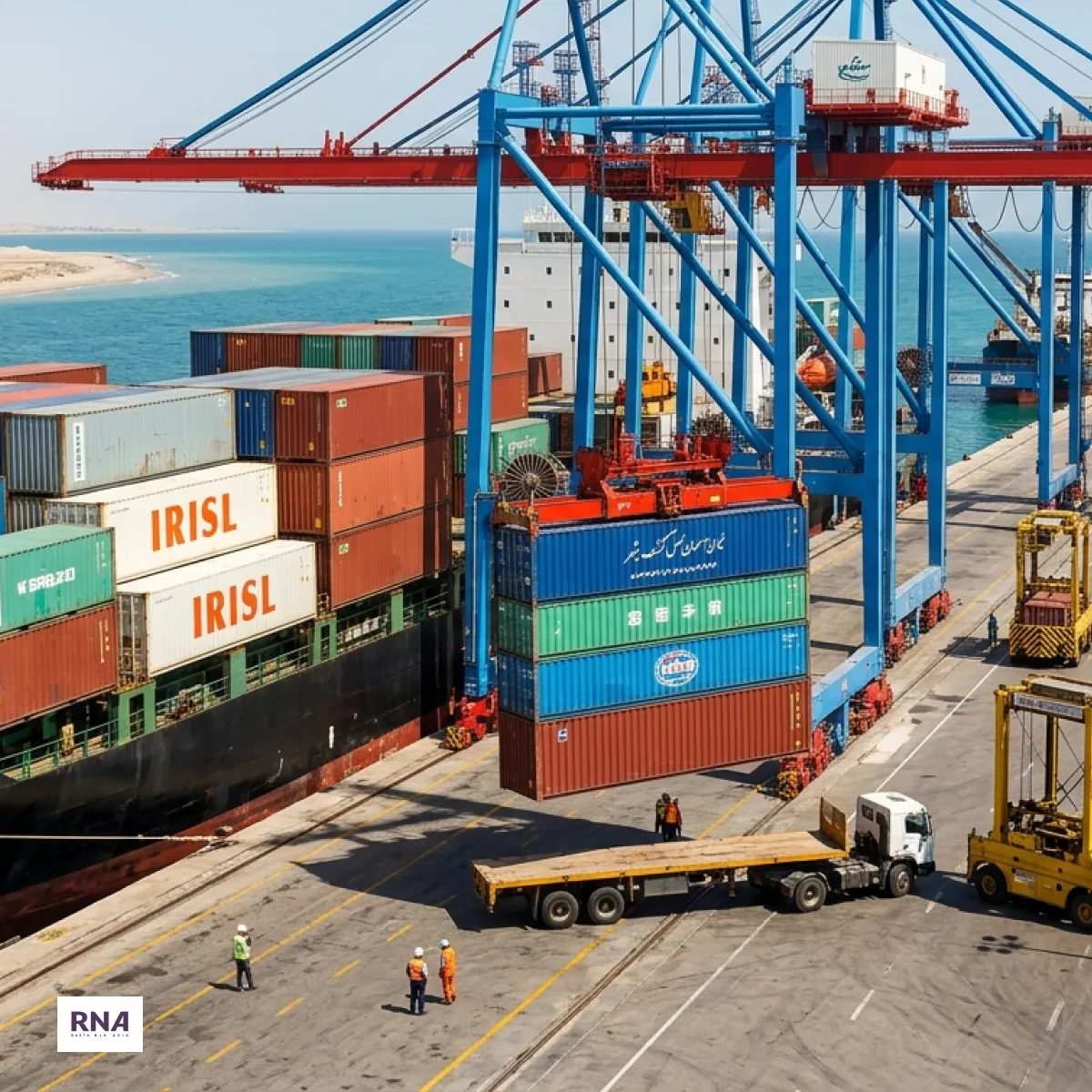
1- Southern Port Entrance: Bandar Abbas and Shahid Rajaee
Most sea cargo from India, China, the UAE, and Southeast Asia enters Iran through these southern ports on the Strait of Hormuz. Once unloaded, goods move onward by truck or rail. Chabahar Port, further east on the Gulf of Oman, is a growing alternative entry point, particularly for cargo heading toward Afghanistan and Central Asia.
Learn more: Main Ports in Iran for International Shipments
 2- Northern Exit Points
Cargo heading to Central Asia, the Caucasus, or Eastern Europe usually exits through one of these border crossings:
- Sarakhs: to Turkmenistan and onward to Central Asia
- Bazargan: to Turkey and on to Europe
- Astara: to Azerbaijan and the Caucasus
- Incheh Boroun: rail link to Turkmenistan
- Jolfa: to Nakhchivan and Armenia
These crossings work well for both truck and rail transport, depending on cargo volume and urgency.
The International North-South Transport Corridor (INSTC)
The INSTC connects India, Russia, and Central Asia through Iran, cutting weeks off routes that would otherwise go around the continent by sea. Cargo can move by ship, rail, and road along a single connected corridor, with Iran forming the central land link. For traders moving goods between South Asia and Northern Europe, the INSTC is increasingly the most competitive option on both cost and transit time.
What documents you need for shipping products via Iran?
Shipping goods through Iran requires proper and accurate freight documentation. Here’s what most shipments need:
- Commercial Invoice
- Packing List
- Bill of Lading or CMR waybill (for road transport)
- Certificate of Origin
- Import/Export License (where applicable)
- TIR Carnet (for cross-border road freight under the TIR system)
- Customs declaration filed through Sabtaresh
Make sure your documents match your cargo and are compliant with Iranian regulations.
Customs clearance in Iran
Customs clearance is one of the most important steps when you are shipping products through Iran. Customs clearance in Iran runs through the Islamic Republic of Iran Customs Administration (IRICA), with import declarations processed electronically through the Sabtaresh registration system.
Here’s how the process works:
- Document Check: You need to provide documents like the invoice, packing list, bill of lading, and certificate of origin. These must be correct and match the goods.
- Cargo Inspection: Customs officers may open the shipment to check the contents and compare them with the documents.
- Duties and Taxes: Import duties are usually calculated on CIF value (Cost + Insurance + Freight) and must be settled before release.
- Customs Broker: Most international traders work with a local broker or freight forwarder who understands IRICA procedures and can resolve issues on the spot.
At Rasta Nik Asia, we prepare accurate documentation up front and coordinate directly with trusted customs brokers, so shipments move through IRICA and Sabtaresh without unnecessary delays. You can call us today to get more information.
Modes of transport within Iran

When you are shipping products through Iran, you can choose different ways to move them across the country. The main options that you have are:
Land freight
This is the most common method. Trucks carry goods quickly and can reach almost any location. Land freight is good for both short and long distances.
Rail freight
Rail freight in Iran is best for heavy or bulky shipments. Iran's rail network connects well to Central Asia, especially via Sarakhs and Incheh Boroun.
Sea freight
If your goods enter Iran through southern ports like Bandar Abbas, part of the route may include sea transport before switching to land.
Air freight
This mode of freight is used for high-value or time-sensitive cargo. It is faster but also more expensive.
Multimodal
Many shipments use more than one method of transportation to reach the final destination. For example, sea and road freight or rail and road freight. These are called multimodal or combined transportation.
For example, a shipment from Mumbai to Tashkent might travel by sea to Bandar Abbas, then by rail to Sarakhs, then by truck into Uzbekistan. An experienced freight forwarder in Iran will map out the combination that fits your cargo type, budget, and delivery deadline.
Compliance and Sanctions: What Changed in 2025–2026
International sanctions rules for Iran shifted significantly in late 2025. In September 2025, the UN reimposed sanctions that had been suspended since 2015, and the EU and UK followed with their own restrictive measures shortly after. These changes affect financial transactions, certain goods categories, and shipping and insurance services connected to Iran.
This means compliance now requires more attention than it did a few years ago:
- Confirm your product category is not restricted before booking a shipment.
- Check that your bank and insurer can legally process Iran-related transactions.
- Keep documentation that clearly shows the origin, destination, and nature of your goods.
- Work with a freight forwarder who actively tracks sanctions updates, rather than one relying on outdated rules.
This guide is not legal advice. Sanctions regimes differ by country and can change quickly, so always confirm your specific situation with a trade compliance advisor. A reliable freight forwarder can flag obvious red areas early and help you avoid shipments that stall in customs or get held at a border.
Call us today to get more detailed information based on your cargo and shipment.
Why use a freight forwarder to ship products through Iran?
A freight forwarder is a company that helps you move goods from one country to another. If you want to ship products through Iran, working with a freight forwarder can make the process much easier for you. A freight forwarder handles this complexity for you:
- Manages customs paperwork and IRICA/Sabtaresh filings
- Recommends the right transport mode for your cargo, budget, and timeline
- Maintains relationships with drivers, rail operators, and port agents at every major crossing
- Tracks compliance requirements so your shipment doesn't get stuck at the border
- Gives you one point of contact instead of managing five separate vendors
This support matters most if you're new to Iranian logistics or moving cargo through Iran for the first time.
Industries That Rely on Iran Transit Routes
Rasta Nik Asia moves cargo through Iran for traders across a wide range of industries, including:
- Food and agricultural commodities: grain, produce, and packaged food moving between India, Central Asia, and the Gulf
- Industrial equipment and machinery: heavy or oversized cargo requiring rail or multimodal solutions
- Textiles and consumer goods: time-sensitive shipments between Turkey, the UAE, and Central Asian markets
- Automotive parts: components moving between manufacturers and assembly points across the region
- Construction materials: bulk cargo for infrastructure projects in Central Asia and the Caucasus
- E-commerce and retail goods: smaller, frequent shipments that need reliable tracking and delivery windows
Tips to make your shipping via Iran easier
Shipping products through Iran can be complex, but the right steps make it smoother. Here are a few tips:
- Work with a reliable freight forwarder in Iran: They help you choose the best type of transportation, handle customs documents, and guide you through every step of the process.
- Prepare documents in advance: Make sure all invoices, permits, and customs papers are ready before shipping.
- Track your shipment: Use tracking tools or ask your freight forwarder for regular updates.
- Understand local rules: Learn about Iran’s import/export rules to avoid delays or work with a freight forwarder.
By following these tips, you can save your time and reduce risks when you are shipping your products through Iran.
Conclusion: Why Work with Rasta Nik Asia
Shipping products through Iran doesn't have to be complicated. With the right logistics partner, it becomes a reliable, cost-effective way to reach markets across Central Asia, the Caucasus, and the Gulf.
Rasta Nik Asia specializes in helping international traders move cargo through Iran, from southern port entry to final delivery at your destination border or warehouse. Our team provides:
- Transparent, detailed shipment reporting
- Fast, responsive English-language communication
- A logistics network covering every major Iranian border crossing
- Support with documentation, customs clearance, and compliance checks
Contact Rasta Nik Asia today to plan your shipment through Iran with a partner who understands the route, the paperwork, and the people who make it move.